
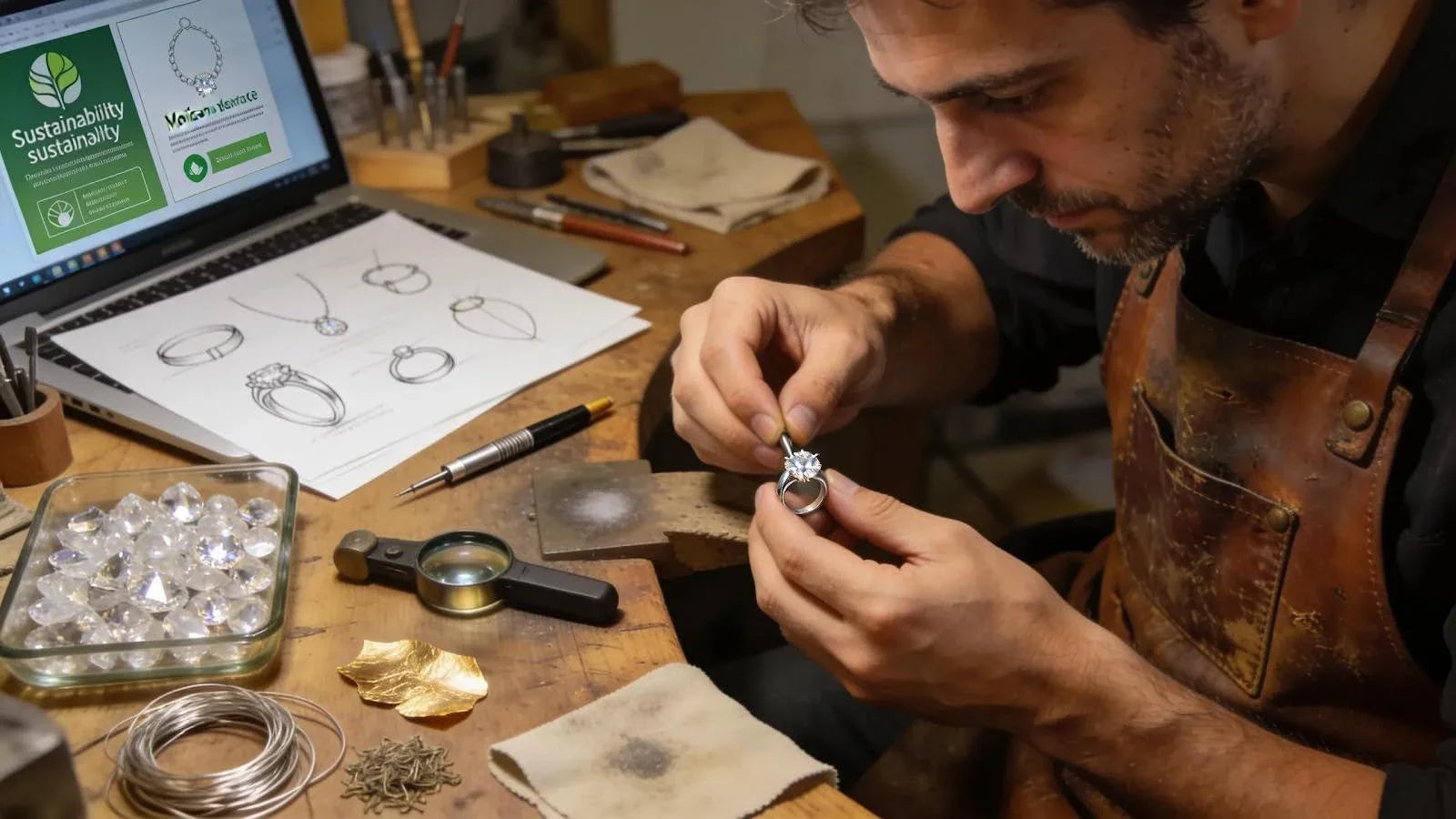
Moissanite is a popular lab-grown alternative to traditional diamonds because it can avoid the impacts of diamond mining. As buyers prioritize social and environmental impact, moissanite offers a lab-grown origin and strong visual appeal.
In this article, we outline moissanite’s benefits, its lab-grown production, and why Italian craftsmanship complements the stone’s qualities.

Whether Moissanite Is A More Considered Gemstone Choice For You
Grown in laboratories, moissanite can avoid mining-related impacts associated with diamonds. Lab production can reduce land disturbance and improve supply-chain traceability. Its total environmental impact depends on energy sources and manufacturing practices.
Production relies on controlled, efficient processes rather than extractive labor and heavy machinery. As ethical concerns rise, moissanite meets demand for transparent, environmentally responsible jewelry. For those exploring moissanite, Italia Chains offers rings, pendants, and earrings alongside Italian silver jewelry.
Moissanite Compared To Diamonds In Ethical Sourcing Considerations
Comparing sourcing practices can highlight important differences.
|
Aspect |
Moissanite |
Mined Diamonds |
|---|---|---|
|
Sourcing Method |
Lab-grown |
Earth-mined |
|
Environmental Impact |
Varies by production method |
Varies by mine and practices |
|
Human Rights Considerations |
Traceability varies by supplier |
Risks vary by source and oversight |
Because moissanite is produced in laboratories, it can avoid many mining-related concerns. Its supply-chain transparency still depends on the seller and manufacturer.
Environmental Considerations When Choosing Lab-Grown Moissanite

Lab-grown moissanite can avoid the land disturbance associated with diamond mining. Its overall environmental impact depends on electricity use, materials, and manufacturing practices. Laboratory production does not automatically use less energy than mining. Compare energy sources and supplier disclosures when assessing its carbon footprint.
How Italian Craftsmanship Enhances Moissanite Jewelry

Italian craftsmanship can shape moissanite jewelry into refined pieces for everyday wear. Design quality and durability depend on the specific piece and setting. Sterling silver marked 925 is a common jewelry metal.
Gold vermeil and other metals should be confirmed on each product page. Italia Chains describes its jewelry as Italian-made and offers moissanite designs in its catalog.
Uniqueness Of Italian Artisan Jewelry Design
Italian artisan jewelry is distinguished by several defining features. Careful finishing can give each piece a polished appearance and reflect attention to craftsmanship. Designers emphasize a philosophy that prioritizes balance, proportion, and timeless beauty, creating pieces that remain elegant well beyond fleeting trends.
How Italia Chains Combines Tradition And Contemporary Design
Italia Chains describes its work as combining Italian craftsmanship with contemporary design. They source materials responsibly and use eco-friendly production methods to honor traditional workmanship while meeting modern ethical expectations.
How Moissanite’s Quality And Durability Work For You Compared To Diamond Alternatives
Moissanite offers strong brilliance, fire, and scratch resistance. These qualities can make it a practical alternative to traditional diamonds. Its visual impact can remain strong over time with appropriate care.
It is well suited to many pieces intended for frequent daily wear. Moissanite has a Mohs hardness of about 9.25 and resists scratching well. It can suit rings and other jewelry intended for frequent daily wear.
Key Differences Between Moissanite And Diamonds
The primary differences between moissanite and diamonds relate to their chemical composition, appearance, and price. Moissanite is composed of silicon carbide, whereas diamonds are carbon-based.
In terms of appearance, moissanite is often noted for displaying greater fire and sparkle, although it may show subtle color variations under certain lighting. Moissanite often costs less than diamonds of comparable size. That difference can allow larger stones or more detailed settings within a budget.
Moissanite As A Practical Choice For Sustainable Engagement Rings
Moissanite can be a practical engagement-ring option because it is durable and often costs less. Its environmental and ethical profile depends on production and supply-chain details.
Its lab-grown origins ensure it bypasses many of the ecological and human rights issues associated with mining. The gemstone’s high hardness rating makes it suited for daily wear, maintaining its beauty over time.
What Benefits You Gain By Choosing Conflict-Free And Lab-Grown Moissanite Gems
Conflict-free, lab-grown moissanite brings several clear benefits that appeal to modern consumers. Its origins are transparent and free from conflict, ensuring an ethical supply chain. The gemstone also boasts bright brilliance and long-lasting durability, maintaining its visual appeal even with regular wear.
Ethical Certifications Guaranteeing Conflict-Free Jewelry
Ethical certifications can support transparency across a jewelry supply chain. They do not guarantee that every ethical claim applies to every product. Certification standards can offer evidence about specific sourcing practices. Review the certifier, scope, and product documentation before relying on a claim.
Important Aspects Of Lab-Grown Moissanite Advantages
Lab-grown moissanite offers consistent quality due to tightly controlled manufacturing processes that provide oversight and ensure dependable results. Moissanite differs chemically from diamond but shares some desirable optical and durability qualities. It often costs less than a comparable diamond.
Italia Chains Crafting Ethical Elegance
At Italia Chains, we combine traditional Italian craftsmanship with a strong commitment to ethical and sustainable practices. Our collections feature moissanite as a stunning, conflict-free alternative to mined diamonds, highlighting both beauty and responsibility. We carefully source our materials and maintain transparency throughout our supply chain to ensure every piece meets our high standards for quality and ethics.
We believe jewelry should reflect values that honor the environment and respect human rights. Our artisans blend time-tested techniques with sustainable production methods, creating exquisite, durable pieces that customers can wear with confidence and pride.
Frequently Asked Questions
How does the production process of moissanite affect its environmental impact?
Moissanite is typically produced in controlled laboratory environments, avoiding gemstone mining. Its sustainability depends on energy sources and manufacturing practices. Laboratory production can reduce mining-related environmental disruption. Its carbon footprint varies with electricity sources and manufacturing processes.
What should you consider when choosing moissanite for an engagement ring?
When selecting moissanite for an engagement ring, consider factors such as size, cut, and clarity. Additionally, evaluate the setting style that complements the stone. Moissanite stones are typically more affordable than diamonds, allowing for larger or more intricate designs.
How does the visual appearance of moissanite compare to traditional diamonds?
Moissanite exhibits a remarkable brilliance and fire, often outshining traditional diamonds due to its higher refractive index. Its optical properties can produce noticeable sparkle and colorful flashes under different lighting. Personal preference determines whether that appearance is desirable.
Are there any care instructions specific to moissanite jewelry?
To maintain the beauty of moissanite jewelry, it is recommended to clean it regularly using a mild soap solution and a soft brush to remove dirt and oils. Avoid harsh chemicals that could harm the stone's surface. For storage, keep moissanite jewelry in a fabric-lined box to prevent scratching.
Share:
Benefits Of Rhodium Plating On Silver Jewelry
Silver Vs. Stainless Steel: Which Is Better?