
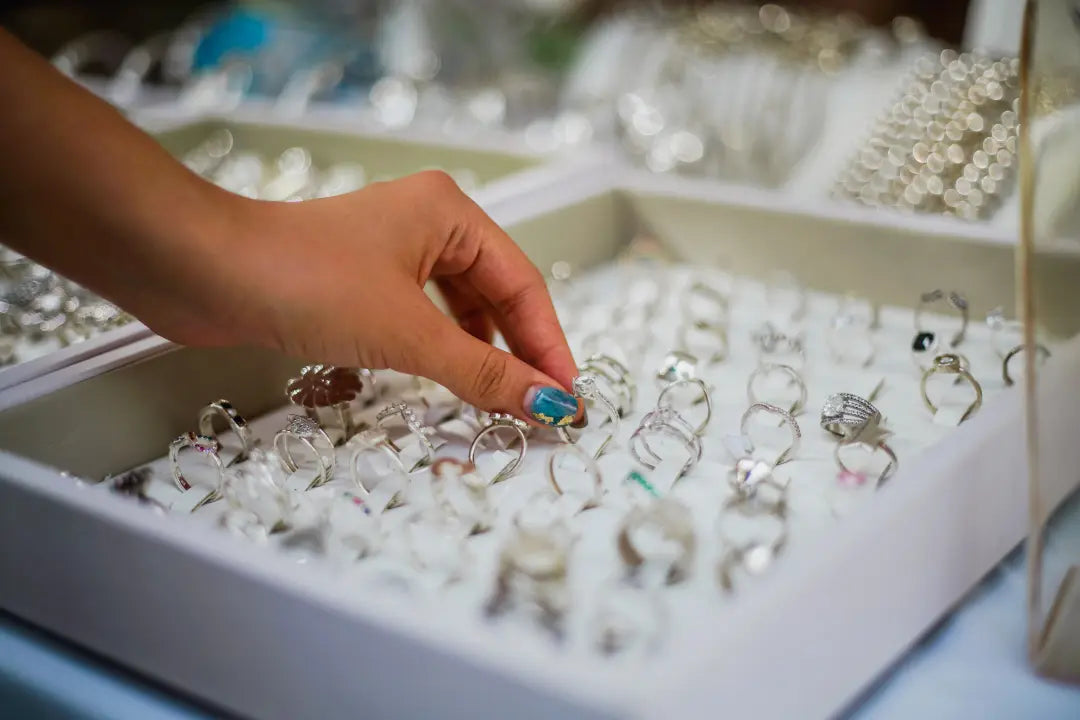
Silver jewelry has remained popular for generations because it offers beauty, versatility, durability, and skilled craftsmanship in a precious metal suitable for everyday wear. Yet judging its true value requires more than checking appearance or finding a “925” stamp. Purity, weight, condition, design, maker, craftsmanship, provenance, and current silver prices can all matter.
Italian silver jewelry is especially admired for its long metalworking tradition, but buyers should still separate genuine quality indicators from marketing claims before making an informed purchase.
What Determines the Quality and Value of Silver Jewelry?
The value of silver jewelry begins with the metal itself, but silver content is only one part of the equation. Two pieces containing the same percentage of silver can have very different retail or resale values because of differences in craftsmanship, design, condition, brand reputation, and rarity.
A simple machine-produced sterling silver chain, for example, may be priced relatively close to its manufacturing and material costs. A handmade or designer piece using the same silver purity may command considerably more because buyers are also paying for design, specialist labor, reputation, and scarcity.

Silver Purity Provides the Foundation for Quality
Pure silver is relatively soft. For jewelry, it is usually combined with another metal to improve strength and durability. Sterling silver contains at least 92.5% silver, commonly expressed as 925 parts silver per thousand. The remaining portion consists of other metals, frequently copper.
The U.S. Federal Trade Commission recognizes “sterling silver” and “sterling” as terms associated with products containing at least 925 parts silver per thousand. The alloy creates a useful balance. It retains the appearance and precious-metal content associated with silver while making jewelry more practical for rings, bracelets, chains, earrings, and other pieces exposed to regular handling.
Alloy Composition Can Affect Durability and Appearance
Copper is commonly used in sterling silver because it increases strength without dramatically changing the appearance of the metal. Other alloy formulations may also be used depending on the manufacturer and the desired characteristics.
The alloy is important because completely pure silver would generally be too soft for many detailed jewelry applications. Rings could deform more easily, clasps could become unreliable, and fine decorative elements could be damaged through normal wear.
However, copper in the alloy can contribute to tarnishing. Silver jewelry can gradually darken as its surface reacts with substances in its environment. Tarnish does not automatically mean that the jewelry is fake or poor quality.
Why Is Italian 925 Silver Jewelry Highly Regarded?
Italian jewelry has developed an international reputation for design and manufacturing. This reputation does not mean every Italian silver item is rare, handmade, or highly valuable, but well-made pieces can demonstrate strong attention to proportion, finishing, construction, and detail.
Italian manufacturers produce everything from accessible commercial jewelry to highly specialized artisan and designer pieces. Buyers therefore need to evaluate the individual item rather than relying on the word “Italian” alone.
Italian Silver Standards Help Buyers Understand Fineness
Italy recognizes 925 and 800 parts per thousand as legal silver fineness standards. Italian precious-metal rules also provide for identification and fineness markings on precious-metal objects covered by the legislation. Italian Chamber of Commerce guidance explains that qualifying precious-metal objects are marked with both the fineness of the alloy and an identification mark.
This distinction is important. A simple “925” mark identifies claimed silver fineness, but by itself it does not prove that an object was manufactured in Italy. For Italian pieces subject to the relevant marking requirements, the official identification mark can provide additional information. Official guidance describes the Italian identification mark as including a star, a registration number, and a provincial abbreviation.
Craftsmanship Can Add Value Beyond Metal Content
The raw silver in a piece provides intrinsic material value, but craftsmanship can substantially influence what buyers are willing to pay.
Fine chains, precise links, secure clasps, smooth soldering, detailed engraving, dimensional surfaces, stone settings, and carefully finished edges all require manufacturing skill. Handmade techniques can further increase labor requirements. A beautifully executed piece may therefore be worth considerably more than the melt value of the silver it contains.
How Can You Identify Authentic Silver Jewelry?
No single test should always be treated as absolute proof of authenticity. Buyers should consider several indicators together, particularly when purchasing expensive, antique, designer, or collectible pieces.
Hallmarks Provide Important Information About Silver Content
A 925 mark indicates that the item is represented as containing 925 parts silver per thousand. Other legitimate silver standards also exist, so the absence of “925” does not automatically prove that an object contains no silver.
Likewise, a 925 stamp alone should not be considered unquestionable proof. Marks can be copied onto counterfeit or misrepresented products. When buying valuable jewelry, examine all available marks, research the manufacturer, consider documentation, and purchase from a seller prepared to accurately describe the metal.
Weight Can Support an Assessment but Cannot Prove Authenticity
Weight can provide a useful comparison, and genuine sterling jewelry may feel more substantial than inexpensive hollow or lightweight imitation pieces.
Weight becomes more useful when assessing value after the metal composition has been established because heavier pieces contain more silver than otherwise comparable lighter pieces.
Construction and Finishing Can Reveal Overall Quality
Inspect a piece closely before buying it. Look at the clasp, links, soldered joints, stone settings, edges, engraving, and polished surfaces.
Quality jewelry normally shows deliberate construction rather than rough joints or careless finishing. Moving components should operate correctly, and decorative features should appear properly aligned.
What Makes Italian Silver Craftsmanship Distinctive?
Italian jewelry production includes a wide range of techniques rather than one universal style. Different workshops and regions may specialize in chains, casting, engraving, textured surfaces, sculptural forms, or other methods.
This diversity is one reason buyers should avoid assuming that all genuine Italian jewelry must display the same decorative features.
Traditional and Modern Techniques Can Appear Together
Italian silversmithing has deep historical roots, but contemporary manufacturers also use modern machinery, precision casting, laser technology, and advanced finishing methods.
Handwork and modern production are not necessarily opposites. A piece may begin with casting or machine production before being assembled, engraved, polished, or finished by skilled workers. For buyers, the more useful question is not simply whether a piece is handmade. Instead, examine how effectively it has been designed and constructed.
Decorative Detail Can Increase Collectibility
Distinctive chains, sculptural forms, filigree-inspired details, engraving, unusual textures, and carefully executed motifs can make individual pieces more attractive to collectors.
Design becomes especially important when the jewelry can be linked to a recognized designer, manufacturer, period, or collection. Generic design usually contributes less collectible value, even when the underlying sterling silver is genuine.
What Pricing Factors Influence the Value of Silver Jewelry?
Silver jewelry pricing does not follow one simple formula. Metal value provides a starting point, but retail and collectible markets consider several additional factors.

Silver Weight and Market Prices Influence Intrinsic Value
The amount of silver in a piece affects its basic precious-metal value. If two sterling pieces are otherwise identical, the heavier piece contains more silver and therefore has greater intrinsic metal value. Silver market prices also fluctuate. Rising or falling bullion prices can influence melt and resale values.
However, retail jewelry prices should not be confused with bullion prices. Jewelry requires design, manufacturing, finishing, packaging, distribution, and retailing, all of which can add costs beyond the underlying silver.
Craftsmanship and Design Affect the Selling Price
A labor-intensive bracelet may cost considerably more than a simple silver bracelet of the same weight.
Detailed construction, hand finishing, specialized techniques, complicated settings, or unusual forms can increase manufacturing costs. Buyers may also place a premium on particularly attractive or recognizable designs. This is why comparing jewelry only by price per gram can give an incomplete picture.
Brand, Rarity, Provenance, and Condition Can Add Value
Recognized makers and designers can command premiums because collectors value reputation and identifiable design history.
Limited production may also increase desirability when genuine collector demand exists. Documentation, original packaging, receipts, certificates, or a traceable ownership history can strengthen provenance for significant pieces. Condition matters as well. Heavy scratches, broken clasps, missing components, damaged stones, poor repairs, or excessive alteration can reduce resale and collector value.
Is Silver Jewelry a Good Investment?
Silver jewelry can retain value, but buyers should be careful with the word “investment.”
Silver is a precious metal with an underlying commodity value, yet buying a piece of jewelry does not guarantee profit. Retail jewelry prices can include costs for manufacturing, design, branding, and seller margins beyond the metal value. Those added costs may not be fully recovered when the jewelry is later resold.
Collectible Jewelry Has Different Value From Scrap Silver
If ordinary sterling jewelry is sold for its metal content, the buyer may primarily consider weight, purity, refining costs, and current silver prices.
Collectible jewelry is different. A desirable designer, rare model, documented historical piece, or exceptional artisan work may sell for substantially more than its silver value because collectors are paying for factors beyond the metal. Therefore, buyers interested in collecting should research makers, production periods, condition, rarity, and actual resale demand rather than assuming all old or Italian silver will appreciate.
Long-Term Value Depends on Buyer Demand
Fashion changes. Brands rise and fall in popularity. Even rare pieces need interested buyers before rarity translates into higher prices.
Silver jewelry is therefore often best purchased first for its quality, design, craftsmanship, and personal appeal. Potential resale value can be an additional consideration rather than a guaranteed financial return.
How Should You Care for Silver Jewelry to Protect Its Value?
Proper maintenance can help preserve appearance and prevent avoidable damage. Care is particularly important for detailed, antique, designer, or collectible pieces.
Gentle Cleaning Helps Preserve the Surface
After wearing silver jewelry, wipe it carefully with a soft cloth to remove oils and surface residue. For routine cleaning, use methods appropriate for the specific piece. Jewelry containing pearls, porous stones, oxidized finishes, plating, adhesives, or deliberately darkened details may require different treatment from plain sterling silver.
Aggressive polishing can remove surface detail or intentional finishes, so older or valuable pieces should be treated carefully.
Proper Storage Can Reduce Tarnish and Damage
Keep silver jewelry dry and store pieces separately when possible. Individual pouches or compartments help prevent chains from tangling and reduce scratches caused by pieces rubbing against each other.
Anti-tarnish materials can also help control exposure to substances that accelerate tarnishing. Remove jewelry before using strong household chemicals, and avoid unnecessary exposure to substances that could damage stones, finishes, or the metal surface.
Discover Authentic Italian Silver Jewelry With Italia Chains
At Italia Chains, we focus on genuine Italian silver jewelry and skilled craftsmanship. We manufacture our jewelry rather than simply reselling pieces from other suppliers. Our collection includes both machine-made and handmade silver chains produced with attention to construction, finish, and detail.
We are especially known for 925 sterling silver jewelry. Our collection includes rope, Cuban, Franco, curb, mariner, and Figaro chains. We also offer bracelets, pendants, rings, earrings, and other silver jewelry.
Italia Chains was founded in Arezzo, Italy, in 2004. We combine Italian jewelry-making traditions with direct manufacturing. This allows us to offer our pieces directly to customers without relying on traditional jewelry resellers. We also operate a U.S. distribution center to support faster shipping from New York.
Frequently Asked Questions
How Can I Tell If Silver Jewelry Is Real?
Check for recognized fineness marks such as “925,” which indicates sterling silver containing at least 92.5% silver. However, a stamp alone does not guarantee authenticity. Examine the craftsmanship, weight, maker’s marks, and seller information as well. For valuable or collectible pieces, professional testing can provide greater certainty.
Is Italian 925 Silver Better Than Regular Sterling Silver?
Italian 925 silver follows the same basic sterling silver purity standard of 92.5% silver. Its reputation often comes from Italy’s established jewelry-making tradition, design expertise, finishing, and craftsmanship. However, not every Italian piece is automatically higher quality, so buyers should assess the individual item rather than relying only on its country of origin.
Does Sterling Silver Jewelry Hold Its Value?
Sterling silver retains some intrinsic value because of its precious-metal content, but resale value depends on more than silver weight. Condition, craftsmanship, designer reputation, rarity, provenance, and buyer demand can all affect price. Collectible or designer pieces may sell for considerably more than their underlying silver value.
Why Does Genuine Silver Jewelry Tarnish?
Sterling silver can tarnish when its surface reacts with sulfur-containing substances and other elements in the environment. Tarnishing does not necessarily indicate that the jewelry is fake or low quality. Regular gentle cleaning, dry storage, and limiting exposure to chemicals, moisture, and certain cosmetics can help maintain its appearance.
Share:
Moissanite Rings vs. Garnet Rings: Red Hues & Brilliance
Your Essential Checklist for Jewelry Care