
Updated on: 2026-05-25
High-Quality Materials in Jewelry determine how well a piece looks, feels, and performs over time. When metals, stones, and finishes are selected with care, jewelry becomes more comfortable to wear and easier to maintain. In addition, responsible material sourcing and precise craftsmanship support consistent quality across designs. This guide explains what to look for so you can choose refined jewelry with confidence.
Table of Contents
What Counts as High-Quality Materials in Jewelry
Metals and Alloys: The Foundation of Quality
Stones and Gem Materials: Clarity, Color, and Care
Finishes and Coatings: Comfort and Longevity
Craft and Construction: Where Quality Becomes Visible
How to Choose High-Quality Materials in Jewelry
Maintenance: Protecting Your Investment
Choosing jewelry is a blend of style and daily practicality. High-Quality Materials in Jewelry influence comfort against the skin, the way light moves across metal, and how reliably a design holds up to everyday wear. Whether you prefer minimalist chains or statement accents, the material choices behind the piece often matter more than trends. This article provides a clear framework for evaluating metal purity, stone quality, and finish durability, with an emphasis on craftsmanship and long-term value.
Benefits & Reasons
High-Quality Materials in Jewelry offer immediate and measurable advantages. A well-chosen metal composition supports stable color and reduces the risk of premature wear. A careful finish can also improve comfort, especially for contact points like wrists, necklines, and collar areas.
Quality materials enhance visual performance. Polished or diamond-cut surfaces reflect light with greater definition, creating a more refined appearance in both indoor and outdoor lighting. When gemstones or alternative stones are selected thoughtfully, they provide consistent color and sparkle without distracting irregularities.
Reliable construction paired with premium inputs improves day-to-day usability. Jewelry that is built with proper thickness, clean edges, and secure settings tends to resist bending and loosening. This is particularly important for pieces that experience frequent movement, such as bracelets and chains.

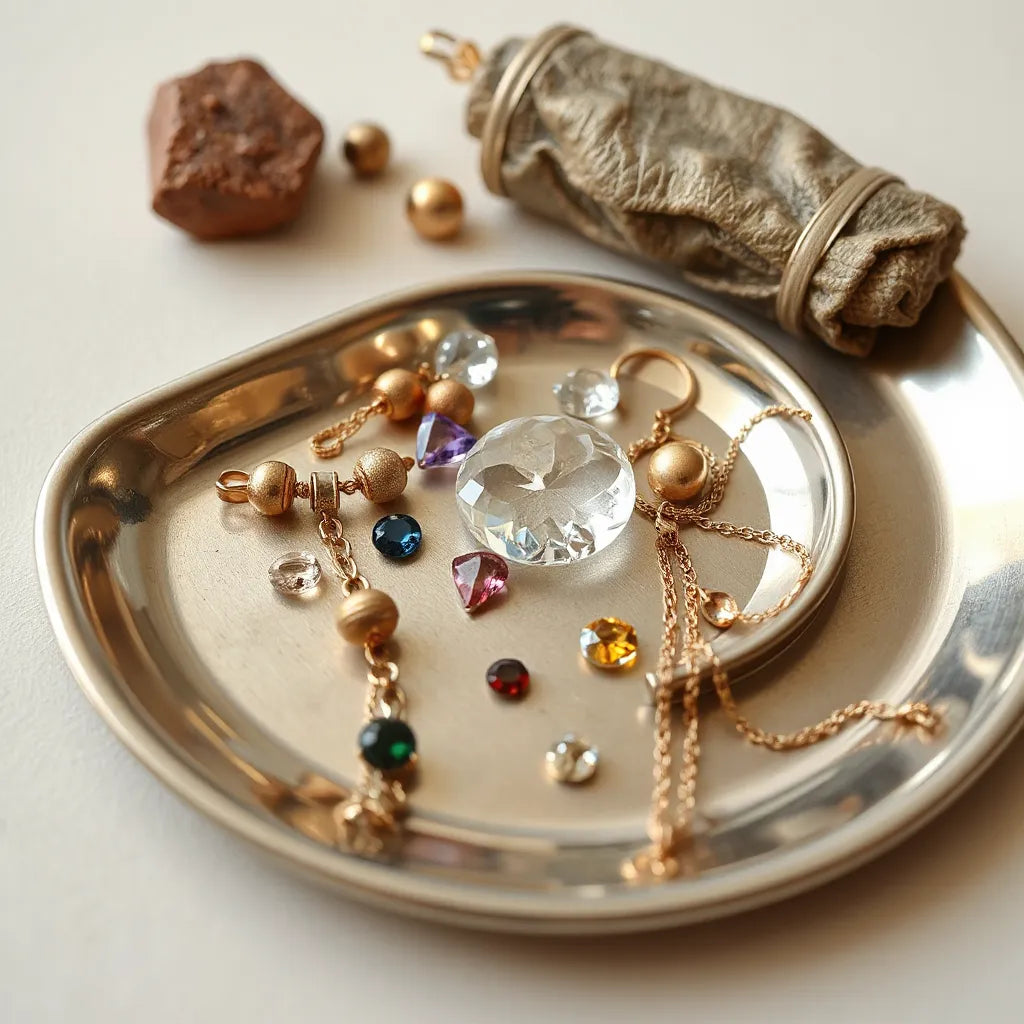
Symbolic metal textures and light reflection patterns
What Counts as High-Quality Materials in Jewelry
High-quality jewelry materials are not defined by one single factor. Instead, quality is a combination of composition, workmanship, and finish design. The most reliable pieces start with metals whose purity suits the intended feel and durability. They continue with clear, consistent stone or gem material selection. Finally, they include finishing methods that support comfort and reduce harsh wear.
For handmade silver jewelry, the metal base is especially significant. Pure-looking shine is often a result of precision cutting and careful polishing. In contrast, low-quality inputs may create dull reflections or uneven surfaces that appear less crisp after normal use.
Similarly, stone quality is not only about appearance. It also concerns the stability of the setting and the resistance of surfaces to minor abrasions. Even visually attractive stones can lose appeal quickly if they are set or sealed without appropriate engineering.
Metals and Alloys: The Foundation of Quality
Most buyers begin with metal type, but deeper evaluation improves decision accuracy. Sterling silver is a common choice due to its favorable balance of beauty and practicality. A consistent hallmark and known purity indicate that the metal has been refined to a standard suitable for everyday wear.
Another consideration is alloy design. In jewelry, small percentages of other metals can influence hardness and resilience. Hardness affects how well the jewelry resists micro-scratches. Resilience also affects long-term appearance and the ability to maintain shape under routine movement.
For gold vermeil options, buyers should consider the underlying silver and the quality of the gold plating. Higher quality vermeil typically uses a properly bonded layer that supports a durable surface. This helps maintain the intended color tone without uneven fading.
If you prefer chain designs, examine link construction and thickness. Even premium metals can underperform if links are too thin or poorly balanced for movement. When you want a stronger visual flow, choose chain profiles with consistent link geometry.
For example, Italiabchains offers chain options that reflect a focus on everyday wearability, including rope designs and diamond-cut textures. You can explore chain styles here: Italian rope chain in sterling silver, Singapore chain with vermeil option, and Singapore chain, wider profile.
Stones and Gem Materials: Clarity, Color, and Care
Stones contribute strong visual impact, but material quality should be assessed with realistic expectations. For many designs, the most important factors are clarity, color consistency, and surface stability. A stone that looks brilliant in photos may still be prone to dulling if the surface is softer than expected or if it receives less protective finishing.
Another consideration is how a stone is integrated into the piece. Secure settings support stability during wear, reducing the chance of loosening. A well-designed setting also prevents snagging, which can damage both the stone and the surrounding metal.
Alternative gems can offer appealing color and sparkle, but buyers should still examine how the material is finished. A smooth surface and consistent cut pattern can improve light performance and make the stone look more uniform across angles.
For customers who want a balanced approach, choosing a piece that pairs stones with a proven metal base can deliver both comfort and durability. This is particularly relevant for pendants and small accents that see frequent contact during daily routines.
Finishes and Coatings: Comfort and Longevity
Finishes are where material quality becomes tangible. A jewelry surface can be polished, brushed, diamond-cut, or plated. Each method changes how light interacts with the piece and how the metal responds to friction.
Diamond-cut detailing is often valued because it creates a defined shimmer. However, diamond-cut techniques must be executed with precision. Clean facets resist uneven wear and maintain shape, while low-precision cutting may cause faster dulling or inconsistent reflection.
For plated options, coating thickness and bonding quality influence how long the surface color remains stable. A reliable vermeil finish can be a practical way to achieve a gold-like tone while still maintaining a strong metal base. Buyers should also consider how the finish handles regular exposure to air, lotion, and sweat. Gentle care can significantly extend the look of coated surfaces.
Comfort is a key finish-related factor. Rounded edges, smooth interior contact points, and controlled tolerances reduce friction on skin. This matters for pieces that are worn close to the body, such as bracelets and necklaces.
Craft and Construction: Where Quality Becomes Visible
Even excellent inputs require accurate assembly. Jewelry construction includes link alignment, clasp reliability, connector strength, and the fit of settings. A well-built clasp supports secure closures and helps maintain the intended drape or bracelet position.
For handmade silver jewelry, craftsmanship often shows in finishing consistency. Clean solder joints, even surface texture, and well-proportioned components contribute to a polished appearance. These elements also support longevity by reducing the chance of weak points and stress damage.
Construction quality also influences how a piece ages. Jewelry that is built with stable geometry tends to maintain its overall shape. Meanwhile, poorly balanced designs may twist, stretch, or wear unevenly over time, even if materials are initially attractive.
Consider how you wear jewelry. If you often type, work with your hands, or move frequently, prioritize pieces with robust link behavior and secure closures. These practical choices align with material quality because stable construction reduces strain on both metal and any decorative elements.
How to Choose High-Quality Materials in Jewelry
A structured selection process prevents costly mistakes. Start by identifying the base material type you want, then confirm the purity standard and look for consistent finishing. Next, evaluate how the piece will be worn, including contact points and movement frequency. Finally, consider maintenance requirements to ensure the jewelry remains attractive with realistic care.
Use the following checklist to guide decisions:
- Purity and standard: Check for clear hallmarking and an appropriate metal purity for the intended design.
- Surface finish: Look for consistent polishing or diamond-cut detail without obvious roughness.
- Setting quality: Inspect stone security and edge smoothness around decorative areas.
- Clasp reliability: Choose a closure that secures properly and opens without excessive force.
- Comfort: Verify rounded edges and smooth interior contact points.
It also helps to buy from brands with a clear production story. Italiabchains makes all jewelry in Italy and ships directly to customer, which supports tighter quality control and consistent material handling. This direct approach can also improve transparency around design intent and finishing discipline.
Featured Bracelet Example
If you want a practical illustration of High-Quality Materials in Jewelry, consider a diamond-cut rope style bracelet. A design with crisp facets can create a refined shimmer while maintaining flexibility for daily wear. For a model that highlights material choice and finish detail, the following bracelet is a strong example of quality-focused construction.
925 Sterling Silver 4mm Diamond Cut Rope Bracelet

When evaluating this style, pay attention to the rope profile and the diamond-cut pattern. A rope structure creates an even visual flow, while diamond-cut detailing adds controlled sparkle. The selected metal base supports comfort and helps maintain a polished appearance when cleaned properly. If you prefer a warmer tone, a vermeil option can provide gold-like color while keeping the design familiar and versatile.
To compare similar chain finishes and rope styling, you may also review these internal options: 3mm diamond-cut rope chain and 4mm diamond-cut rope chain.

Conceptual rope links, light facets, and secure closure
Maintenance: Protecting Your Investment
Proper maintenance sustains the appearance of premium jewelry materials. Start with safe daily habits. Remove jewelry before swimming, heavy cleaning, or applying lotions and hair products. These routines reduce the accumulation of residue on metal surfaces and reduce the risk of finish dulling.
For cleaning, use gentle methods. Soft cloths can remove surface fingerprints and light buildup. For deeper cleaning, choose appropriate silver care designed for sterling silver and avoid harsh chemicals that can affect metal tone or plating.
Storage matters as well. Keep pieces separated to reduce friction and micro-scratches. A dry storage environment can help limit tarnish development. For coated surfaces, avoid rough contact and store with protective coverings.
Finally, inspect your jewelry periodically. Check clasps for smooth operation and confirm that any stone or decorative component remains secure. Early attention to minor issues can prevent more serious wear later.
Quick care practices for sterling silver and vermeil
- Wipe with a soft, dry cloth after each wear.
- Store in a dry, protective setting away from other jewelry.
- Clean gently using products intended for the specific metal type.
- Avoid direct exposure to harsh chemicals and extended moisture.
FAQ
How can I tell if a jewelry piece uses High-Quality Materials in Jewelry?
Look for clear metal standards, consistent finishing, and reliable construction. Quality pieces show uniform surface detail, secure closures, and well-finished contact points. For stones, inspect clarity, even color, and stable settings.
Is sterling silver jewelry durable for everyday wear?
Yes, sterling silver can be durable when the piece is properly constructed and cared for. Choosing a well-finished design with stable link geometry helps reduce uneven wear. Gentle cleaning and careful storage also support long-term appearance.
How does vermeil differ from solid gold in terms of material quality?
Vermeil typically involves a gold layer bonded over a silver base. The key quality factor is the plating bonding quality and the suitability of the finish for regular wear. With appropriate care, vermeil can provide a gold-like look while using a strong metal foundation.
Final Thoughts & Recommendations
High-Quality Materials in Jewelry are the most dependable foundation for comfort, visual clarity, and long-term wear. When you evaluate metal standards, finishing discipline, and construction quality, you reduce the likelihood of disappointment and increase the chance that the piece remains a reliable part of your wardrobe. If you prefer handmade silver jewelry made in Italy, consider exploring Italiabchains for chain and bracelet styles designed for daily use, with direct shipping to the customer.
To further refine your selection, compare diamond-cut rope styles and chain profiles across metals and finishes. Explore: diamond-cut rope chain necklace and Italian horn pendant in sterling silver or vermeil.
Choose with intention, wear with confidence, and maintain your pieces with consistent care.
About the Author Section
Mike Luciano is a jewelry materials and craftsmanship specialist focused on evaluating metal purity, finishing methods, and build quality. His expertise emphasizes how design decisions affect comfort, durability, and everyday wear performance. He supports shoppers with practical guidance grounded in industry standards. Thanks for reading, and may your next jewelry selection reflect both style and enduring quality.
Disclaimer: This article provides general educational information about jewelry materials and care. It is not intended as professional advice for specific skin conditions, allergies, or medical concerns. Always follow manufacturer care guidance and consult a qualified professional for personal needs.
Compartir:
Silver Rope Chains: Styling Ideas for Everyday Wear
How an Italian Jewelry Designer Shapes Timeless Style