
Updated on: March 14, 2026
A stylish stacking bracelet offers versatility and elegance for any occasion. These layered pieces combine timeless design with modern appeal, allowing you to express your personal style through customizable combinations. Sterling silver stacking bracelets are durable, affordable, and perfect for building a signature jewelry collection. Learn how to choose, style, and care for these essential accessories.
Table of Contents
- Understanding the Appeal of Stacking Bracelets
- Myths vs. Facts About Stacking Jewelry
- Personal Experience with Layered Pieces
- How to Style Your Collection
- Materials and Durability Considerations
- Proper Care and Maintenance
- Frequently Asked Questions
- About the Author
Understanding the Appeal of Stacking Bracelets
A stylish stacking bracelet has become a cornerstone of contemporary jewelry fashion. These versatile pieces allow wearers to layer multiple bracelets together, creating personalized combinations that reflect individual taste and lifestyle. The beauty of stacking lies in its flexibility: you can wear a single piece for minimalist elegance or combine several bracelets for bold, layered impact.
The trend of wearing multiple bracelets simultaneously has evolved from a casual aesthetic to a refined jewelry statement. Modern consumers appreciate the ability to mix and match different widths, textures, and finishes. Sterling silver serves as an ideal foundation for stacking collections because it pairs beautifully with other metals and gemstones without overwhelming the wrist. Whether you prefer delicate, thin bands or more substantial rope-textured designs, layered bracelets offer endless possibilities.
Quality craftsmanship matters significantly when selecting pieces for stacking. Bracelets manufactured in Italy, such as those created by Italia Chains, showcase exceptional attention to detail and superior material quality. Italian artisans bring centuries of jewelry-making tradition to each piece, ensuring that your stacking collection maintains its beauty and structural integrity for years to come.

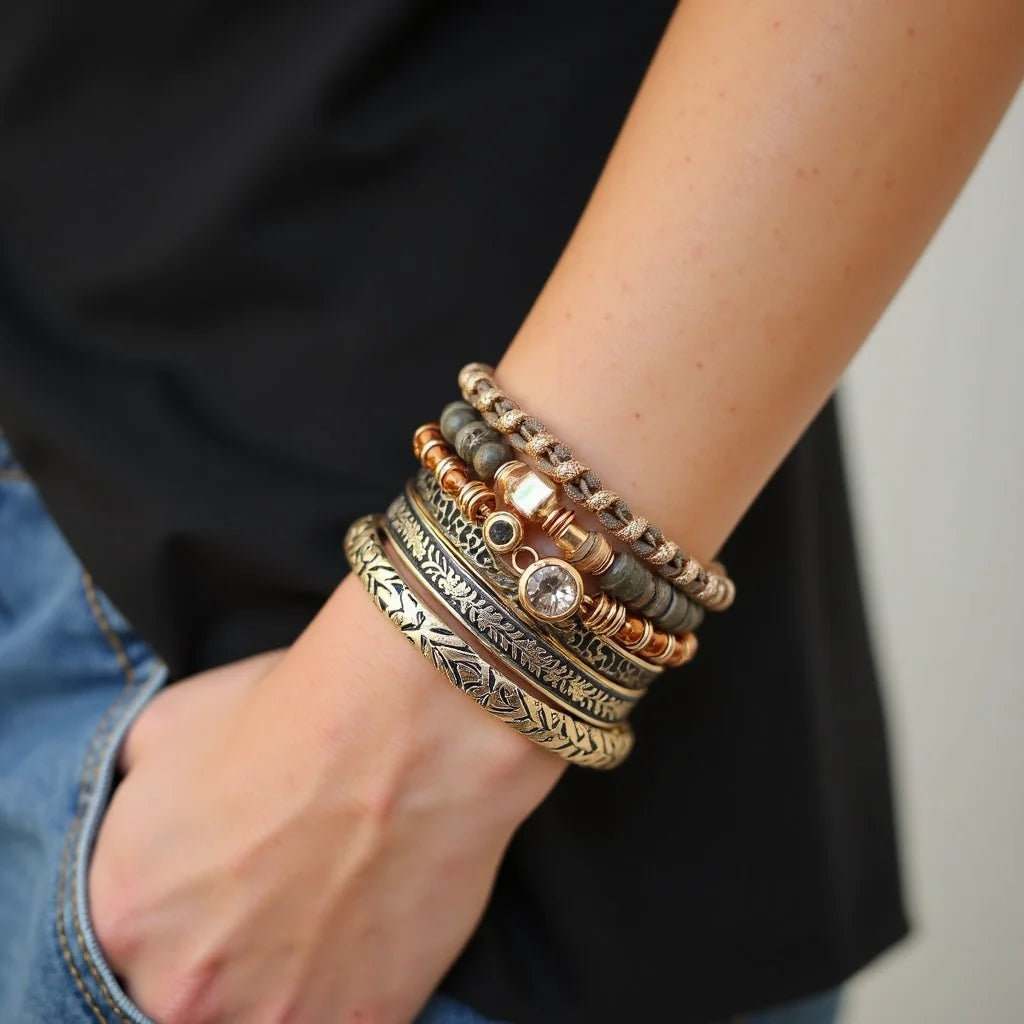
Layered wrist display showing multiple metallic textures and geometric patterns in harmony.
Myths vs. Facts About Stacking Jewelry
- Myth: Stacking bracelets will scratch each other and damage the finish. Fact: High-quality sterling silver bracelets resist scratching, and proper care prevents visible wear. Regular polishing maintains their lustrous appearance.
- Myth: Wearing multiple bracelets at once looks cluttered and unprofessional. Fact: When chosen thoughtfully, stacked bracelets create sophisticated, intentional styling that enhances professional and casual wardrobes alike.
- Myth: Stacking bracelets must all match in style or metal type. Fact: Mixing textures, widths, and even metal finishes creates visual interest and allows for creative self-expression within your collection.
- Myth: Sterling silver stacking bracelets are too delicate for everyday wear. Fact: Sterling silver possesses excellent durability when properly maintained, making it suitable for daily use and long-term wear.
- Myth: You need to purchase expensive branded sets to create attractive stacking combinations. Fact: Building a collection gradually from quality artisan sources offers better value and greater customization than pre-made sets.
Personal Experience with Layered Pieces
My journey with stacking bracelets began unexpectedly during a visit to an Italian jewelry workshop. I had always appreciated minimalist accessories, but observing craftspeople create delicate sterling silver bands sparked a new appreciation for layered designs. The artisan showed me how different bracelet widths could work together, demonstrating that stacking was not about quantity but about thoughtful composition.
I started with a single rope-textured bracelet and gradually added complementary pieces to my collection. What surprised me most was how this simple addition transformed my daily styling routine. On professional days, I wore a single elegant band. For weekend events, I combined three or four pieces to create more dynamic visual interest. This flexibility aligned perfectly with my lifestyle, offering sophistication without requiring an extensive wardrobe of separate jewelry pieces.
The experience taught me that quality matters profoundly in stacking collections. Each bracelet needed to feel substantial, move gracefully on the wrist, and maintain its appearance through daily wear. Investing in well-crafted Italian-made pieces proved worthwhile, as they became reliable staples I reached for repeatedly.
How to Style Your Collection
Creating an effective stacking bracelet collection requires understanding proportion and visual balance. Begin by selecting a primary piece—this serves as your foundation, typically the widest or most textured bracelet in your combination. A rope-textured design works particularly well as a focal point because its three-dimensional quality catches light beautifully.
Next, introduce complementary pieces with varying widths. Thinner bands work well alongside more substantial bracelets, creating rhythm on your wrist. Consider the spacing between pieces: slight gaps between bracelets look more intentional than having them touch continuously. This spacing allows each piece to be appreciated individually while contributing to the overall composition.
Metal finishes deserve careful consideration when combining pieces. Sterling silver provides a unified metallic tone across your entire stack. You might incorporate bracelets with different surface textures—some polished and smooth, others with diamond-cut faceting that creates subtle sparkle. This textural variation maintains visual interest without requiring multiple metal types.

Wrist arrangement demonstrating varied band widths and textured surfaces in coordinated progression.
Consider your clothing and lifestyle when determining how many bracelets to wear. Professional environments often favor three or fewer pieces in coordinated styles. Social occasions allow for bolder combinations with four or more bracelets. The goal is creating an appearance that feels intentional and curated rather than random or excessive.
Materials and Durability Considerations
Sterling silver remains the preferred material for quality stacking bracelets due to its balance of beauty, durability, and affordability. Pure silver is too soft for jewelry construction, so sterling silver combines ninety-two and one-half percent pure silver with other metals to increase hardness and longevity. This composition ensures your bracelets withstand daily wear while maintaining their lustrous appearance.
The craftsmanship behind your bracelet significantly impacts its durability. Bracelets manufactured by skilled Italian artisans demonstrate superior construction techniques that extend their lifespan considerably. A quality sterling silver rope bracelet features consistent thickness, secure closures, and properly finished edges that resist snagging.
When selecting pieces for your collection, examine the closure mechanism carefully. Lobster claw clasps and spring-ring closures should operate smoothly without sticking. The bracelet should feel substantial on your wrist—lightweight bracelets often indicate thinner metal that may bend or break with regular wear. Reputable manufacturers provide detailed specifications about metal thickness and weight, transparency that indicates confidence in their product quality.
Proper Care and Maintenance
Maintaining your stylish stacking collection requires minimal effort when following essential care practices. Sterling silver naturally tarnishes over time due to exposure to air and moisture, but this darkening can be easily reversed through regular cleaning. Gentle polishing with a soft microfiber cloth restores brightness and luster to your bracelets.
Store your bracelets separately to prevent unnecessary contact and scratching. Small individual pouches or compartments in a jewelry box work well for this purpose. When not wearing your bracelets, keep them in a cool, dry location away from direct sunlight and excessive humidity. This simple storage practice significantly extends the time between professional cleaning appointments.
Remove your bracelets before swimming, showering, or engaging in strenuous activities. While sterling silver resists corrosion, exposure to chlorine and salt water can accelerate tarnishing. Similarly, lotions, perfumes, and harsh chemicals should be applied before putting on your jewelry rather than afterward.
Professional cleaning becomes necessary only occasionally, typically once or twice yearly for daily-wear pieces. When you notice significant tarnishing, a jeweler can restore your bracelets to their original brilliance using appropriate cleaning solutions and techniques. Between professional cleanings, gentle hand polishing maintains their appearance effectively.
Featured Product: Quality Sterling Silver Craftsmanship
925 Sterling Silver 2mm Diamond Cut Rope Bracelet

This elegant bracelet exemplifies the quality and craftsmanship that defines Italia Chains products. The two-millimeter rope design features diamond-cut faceting that creates subtle light reflection across the surface. Made from solid 925 sterling silver and manufactured in Italy, this piece serves as an excellent foundation for building a stacking collection. The refined dimensions work beautifully alongside other bracelets while maintaining visual balance on the wrist.
Frequently Asked Questions
Can I wear stacking bracelets every day without damaging them?
Yes, sterling silver bracelets are durable enough for everyday wear. However, you should remove them before swimming, showering, or engaging in activities where they might experience impact or chemical exposure. Regular maintenance through gentle cleaning ensures they maintain their appearance through years of daily use. Italia Chains manufactures bracelets specifically designed to withstand regular wear while retaining their beauty.
How many bracelets should I stack together for an attractive appearance?
The ideal number depends on your personal style and the occasion. For professional settings, three or fewer bracelets typically creates a refined appearance. Social and casual settings allow for more creative combinations of four to six bracelets. The key is ensuring each piece is visible and intentional rather than appearing crowded. Start with fewer pieces and gradually add more as you develop your personal styling preferences.
What is the difference between rope-textured bracelets and smooth designs for stacking?
Rope-textured bracelets, like those featuring diamond-cut faceting, create visual interest and catch light beautifully, making them ideal as focal pieces in your stack. Smooth bracelets provide contrast and allow textured pieces to stand out. Italian rope chain designs demonstrate how texture adds dimension to jewelry. Combining both styles creates balanced, sophisticated compositions on your wrist.
How do I prevent my stacking bracelets from tarnishing?
Store bracelets in a cool, dry location away from direct sunlight and humidity. Keep them separated to minimize contact between pieces. Avoid exposing them to chlorine, salt water, lotions, and perfumes. Regular gentle polishing with a soft cloth prevents tarnishing from becoming visible. These simple practices maintain your bracelets' lustrous appearance and reduce the need for professional cleaning.
Are Italian-made bracelets worth the investment?
Italian jewelry manufacturing carries centuries of tradition and expertise. Artisans producing bracelets in Italy demonstrate superior craftsmanship, use high-quality materials, and employ techniques that ensure durability. While Italian-made pieces may carry higher initial costs than mass-produced alternatives, their longevity and timeless design make them excellent long-term investments. You will reach for these bracelets repeatedly, amortizing the cost over years of reliable, beautiful wear.
Can I mix different metal finishes in my stacking collection?
While you can mix finishes creatively, maintaining a unified metal base—such as sterling silver across all pieces—creates visual cohesion. You can vary surface textures (polished versus diamond-cut) while keeping the underlying metal consistent. This approach allows for personalization and interest without appearing disjointed. Once you have mastered coordinating within a single metal type, you can experiment with incorporating complementary metals like gold vermeil for more advanced styling.
What bracelet width works best for stacking?
Widths typically range from two millimeters to six millimeters or more. Two to three millimeter bracelets work well as secondary pieces, while four to six millimeter designs serve effectively as focal pieces. The ideal combination uses varied widths—perhaps a three millimeter piece alongside a two millimeter band, with a thicker four millimeter bracelet as the anchor. This variation in width creates visual rhythm and prevents monotony on the wrist.
How should I clean my sterling silver bracelets at home?
Use a soft, non-abrasive microfiber cloth to gently polish your bracelets regularly. For deeper cleaning, create a solution of warm water and mild dish soap. Soak your bracelets for a few minutes, then gently scrub with a soft brush or cloth. Rinse thoroughly with clean water and dry completely with a soft cloth. Avoid harsh chemicals, ultrasonic cleaners, or abrasive materials that could damage the metal finish.
About the Author
Mike Luciano brings fifteen years of expertise in handmade jewelry design and Italian craftsmanship to his writing. As a passionate advocate for quality artisan pieces, Mike specializes in helping customers build meaningful jewelry collections that balance style, durability, and value. His deep appreciation for Italia Chains' commitment to manufacturing exceptional sterling silver pieces directly in Italy informs his recommendations and insights. When not writing about jewelry, Mike enjoys exploring emerging design trends and connecting with the vibrant community of jewelry enthusiasts worldwide.
Compartir:
Cuban Link Chains for Men: Modern Styling Guide Essentials
Handmade Silver Chains: A Practical Styling Guide for All