
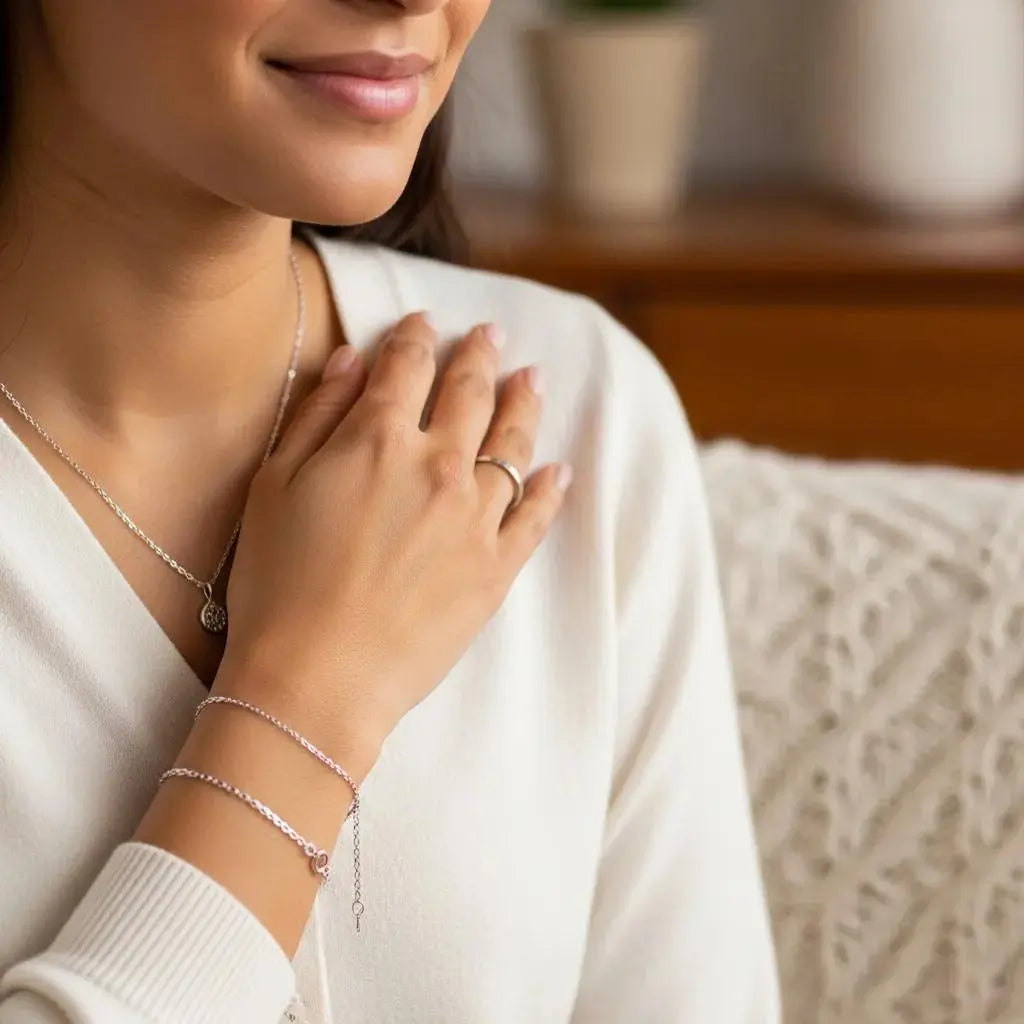
Rhodium Plating: Is it Worth the Investment?

Rhodium plating is a simple upgrade that can make sterling silver look and perform better. It gives pieces a bright, longer-lasting shine, helps slow tarnish, and may reduce skin irritation.
Here, we break down how rhodium works, why it’s a common choice for 925 Italian silver, how it compares to unplated sterling, and practical care tips to keep your jewellery looking its best.
What Rhodium Plating Is and How It Makes Sterling Silver Better
Rhodium plating applies a very thin layer of rhodium, a precious metal in the platinum family, over sterling silver.
The process, usually electroplating, adds both visual brilliance and a protective surface that slows tarnish. Jewellers commonly plate 925 sterling silver to preserve its finish and make pieces ready for everyday wear.
Rhodium and How Jewelers Apply It
-
Rhodium is a rare, silvery-white metal valued for its brightness and hardness.
-
Before plating, the silver piece is thoroughly cleaned to remove oils and residue.
-
The piece is placed in a rhodium solution.
-
An electric current is used to deposit a thin, even rhodium layer (electroplating).
-
This creates a highly reflective finish with added surface durability.
-
The final result improves the jewelry’s shine, feel, and everyday wear performance.
Benefits of Plating Sterling Silver Jewelry
-
Sterling silver contains copper, which can oxidize and darken over time.
-
Tarnish is often triggered by sulfur compounds in the air and moisture/humidity.
-
Rhodium plating adds a thin protective layer over the silver.
-
That barrier reduces direct contact with tarnish-causing elements.
-
As a result, the piece stays whiter and glossier for longer with less frequent polishing.
How Rhodium Boosts Tarnish Resistance and Overall Durability?

Rhodium acts as a protective barrier over the silver, keeping corrosive elements away from the metal beneath. That barrier is the key reason rhodium‑plated jewellery maintains its initial shine with less frequent polishing.
Rhodium as a Tarnish-Resistant Shield
The rhodium coating helps reduce contact with sulfur compounds and moisture that can reach the silver. That slows the reactions that cause tarnish. For everyday pieces, that means less time cleaning and more time wearing them.
Extending Silver Wear with Rhodium Coating
Because rhodium is a hard metal, it helps resist minor scratches and scuffs that would show up on bare silver. That added protection can delay visible wear, but remember the plating is thin and will eventually wear off with heavy use. When it fades, re‑plating restores the finish.
How Does a Rhodium Finish Improve Visual Impact and Skin-Friendly Comfort?
Beyond durability, rhodium gives silver a high, almost jewellery-store shine and a crisp white tone that many customers prefer. It’s also valued as a skin-friendly barrier for some wearers.
Rhodium Brightens and Whitens Italian Silver
-
Rhodium adds a bright, mirror-like shine to sterling silver.
-
It makes the metal look whiter and cleaner compared to unplated silver.
-
The extra reflectivity helps fine details and textures stand out more.
-
Diamonds and gemstones can look a bit brighter because more light reflects around them.
-
Plating gives the piece a smooth, “just-polished” finish that can look new longer.
-
It creates that crisp, showroom-style look often associated with classic Italian silver designs.
Rhodium Plating and Sensitive Skin

Often, yes. Rhodium can act as a barrier between your skin and the silver alloy underneath, which may reduce irritation. If the plating wears through, your skin may contact the underlying sterling silver alloy (typically copper-based). If you’re sensitive, periodic inspection and re-plating can help maintain comfort.
How Does Rhodium-Plated Italian Silver Compare to Traditional Sterling Silver?
When you compare the two, rhodium‑plated Italian silver stands out for protection and polish. Traditional sterling has its own charm, but plating adds practical benefits many buyers appreciate.
Appearance and Maintenance Changes with Plating
Rhodium‑plated pieces look brighter and need less frequent polishing than bare sterling. Unplated silver will naturally darken and usually requires regular cleaning to keep its original shine.
Cost vs Value of Rhodium Plating
For people who want low-maintenance jewellery with long-lasting brilliance, rhodium plating can be worth considering. It can help protect against tarnish and light scratches and can elevate the look of the piece. Keep in mind the coating is thin and may need re‑plating over time if worn daily.
How to Care for Rhodium‑Plated Sterling Silver?
Simple care keeps your rhodium finish looking fresh. A few mindful habits go a long way toward preserving the plating and the piece underneath.
Best Cleaning and Storage Practices
Wipe plated jewellery with a soft, lint‑free cloth after wearing to remove oils and residue. Avoid harsh chemicals, abrasive cleaners, and ultrasonic machines that can damage the rhodium. Store pieces in a dry place, ideally separate pouches or a lined jewellery box, to prevent scratches.
If the finish looks dull or you see wear through to the silver, it’s time for re‑plating. A professional jeweller will clean the piece and apply a fresh, even rhodium layer to restore both appearance and protection.
Why Pick Italia Chains Inc. for Rhodium-Finish Italian Sterling Silver
Choosing the right maker matters. Italia Chains Inc. is a direct manufacturer of Italian-made 925 sterling silver jewellery, with rhodium-finish options on select pieces.
Italian Craftsmanship Improves Rhodium-Finish Jewelry
Our jewellery is made in Italy from 925 sterling silver, with finish options that can include rhodium. Careful finishing can help a rhodium layer look more even and polished. The coating can still wear over time and may need re-plating.
Factory‑Direct Value and Fast USA Shipping
Buying factory-direct can reduce retail markups by cutting out middlemen. Italia Chains ships from the USA. You can choose a rhodium finish on select styles for a brighter, more tarnish-resistant look.
How Long Does Rhodium Plating Really Last?
Rhodium plating is worth it if you want a brighter, whiter finish with less polishing and extra protection against tarnish and light scuffs. It can also help if your skin reacts to sterling alloys.
The tradeoff is really simple, but the coating is thin, so daily wear will eventually dull or wear through, and re-plating adds ongoing cost. Choose it for rings, chains, and bracelets you wear often, and commit to gentle cleaning and dry storage. Ask about plating thickness and service.
Frequently Asked Questions
How Long Does Rhodium Plating Last On Sterling Silver?
Rhodium plating's lifespan varies with wear and care, but many pieces keep their finish for months to years. Factors like daily wear, exposure to moisture, and contact with chemicals can shorten that timeline. Following care tips, like gentle cleaning and proper storage, helps extend the plating.
Can Rhodium Plating Be Removed, And How Is That Done?
Jewellers can strip rhodium using a controlled stripping process to remove the coating. This should only be done by a professional to avoid harming the silver beneath. After stripping, the piece can be replated if you want to restore the rhodium finish.
Is Rhodium Plating Environmentally Friendly?
Rhodium is a precious metal, and it can be recycled. Some plating operations reclaim metals and treat rinse water, but practices vary. That said, mining and refining have environmental impacts. If sustainability matters to you, ask your jeweller about recycled metals and specific factory practices.
Does Rhodium Plating Change A Piece’s Resale Value?
Plating can improve resale appeal by keeping a piece brighter and more wearable. But buyers also consider the condition of the plating and whether re‑plating will be required. Overall value depends on craftsmanship, brand reputation, and the piece’s condition, in addition to the plating.
Compartir:
Heavy Cuban Link Chains A Bold Guide to Strength and Style
How to Mix and Match Fashionable Silver Rings for Any Style