
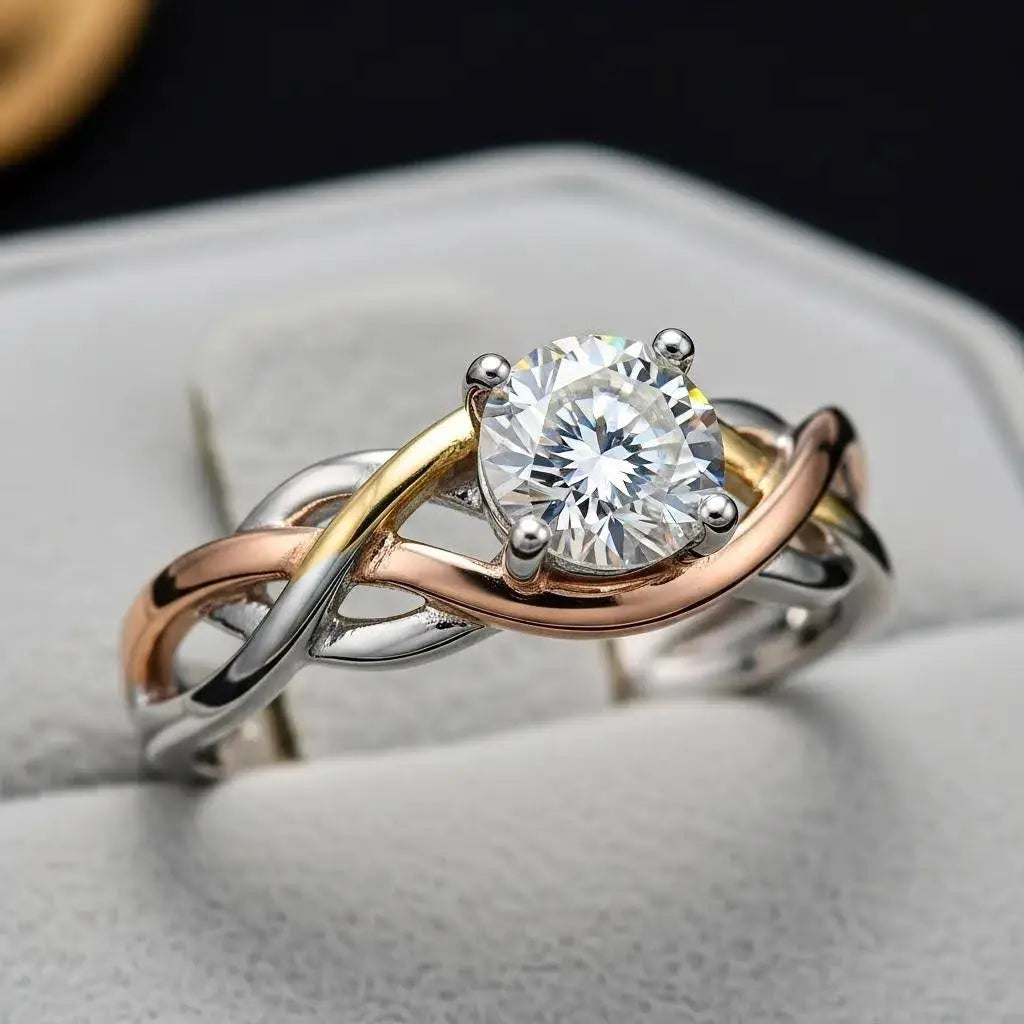
Tri-colour 925 sterling silver brings together classic elegance and contemporary flair, giving you pieces that feel both timeless and current.
In this guide, we explain what makes tri-colour jewellery special, from the metal makeup and finishing techniques to Italian manufacturing and craftsmanship. You’ll also find practical tips for styling and care. Whether you’re choosing a signature piece or checking authenticity, you’ll find clear, reliable information to help you pick jewellery that looks great and lasts.

What Is Tri-Colour 925 Sterling Silver Jewellery?
Tri-colour 925 sterling silver refers to pieces that combine three metal tones, silver, yellow-gold, and rose-gold finishes, on a sterling silver foundation.
Using 925 sterling silver as the base gives the jewellery strength and a fine finish that works well with multiple platings and colour accents. The result is versatile jewellery that complements many wardrobes and occasions while keeping a durable sterling silver base.
How Are Silver, Gold, and Rose Gold Combined in Tri-Colour Jewellery?
Designers achieve tri-colour looks mainly through selective plating and finishing. Some designs use separate sections or inlays to keep colour blocks distinct. Plating applies thin layers of gold- or rose-gold-coloured metal over the sterling silver base.
Some designs combine separate components to create multi-tone sections. Skilled finishing preserves colour balance and detail, so the three tones stay vibrant and well-defined over time.
Why 925 Sterling Silver Works Best for Multi-Tone Jewellery
925 sterling silver is 92.5% pure silver with a 7.5% alloy, usually copper, added for strength. That combination gives the metal enough resilience for everyday wear while maintaining a bright, high-quality finish.
It’s also generally hypoallergenic for many wearers (though those with extreme metal sensitivities may react to the alloy). Its malleability and surface quality make it an excellent canvas for multi-tone designs.
How Does Italian Craftsmanship Enhance Tri-Colour Sterling Silver Jewellery?
Italy’s jewellery tradition is built on meticulous technique and an eye for proportion. When tri-colour pieces are produced by Italian artisans, you’ll often see finer finishing, careful colour transitions, and detailing that experienced makers can deliver. That attention transforms well-made jewellery into pieces that feel refined and enduring.
Traditional Techniques Used in Italian Silver Jewellery

Some classic Italian techniques like hand-hammering, delicate filigree, and precision engraving add texture, depth, and character to select designs. These methods are often passed down through generations and produce subtle variations that signal true craftsmanship, small marks of human skill that machine work can’t fully replicate.
Why “Made in Italy” Signals Quality in Tri-Colour Jewellery
"Made in Italy" is often used to signal a standard of materials and finish. Buyers associate it with careful sourcing, reliable hallmarks, and exacting production steps. For tri-colour jewellery, that reputation translates to pieces that balance aesthetic appeal with build quality, giving buyers confidence in their purchase.
How Can You Verify the Authenticity of Tri-Colour 925 Sterling Silver Jewellery?
Confirming authenticity protects you from low-quality imitations. Simple checks, visual inspections, hallmark verification, and basic tests help you confirm whether a piece meets the 925 sterling silver standard and whether claims of Italian origin hold up.
Hallmarks and Tests for Genuine Italian Sterling Silver
Genuine pieces will typically show a "925" stamp for silver content. Reputable Italian makers may add a maker’s mark and the words "Italy" or "Made in Italy."
In Italy, a registration mark is often shown as a star + number + province code alongside the fineness mark. Practical tests like the magnet test (silver is not magnetic) or an acid test performed by a professional can further confirm metal content.
Italia Chains Inc. Authenticity and Quality Standards
Italia Chains Inc. states it is a direct manufacturer of 925 sterling silver chains and that its pieces are made in Italy. The brand also says it guarantees the authenticity of its jewellery. Product pages list material and finish details.
Where noted, you can also look for “925” and “Italy” markings on the piece itself. On its site, Italia Chains highlights factory-direct pricing, fast shipping, and its stated authenticity guarantee. Review the product details and policies before you buy.
What Are the Best Styling Tips for Tri-Colour Sterling Silver Jewellery?
Tri-colour jewellery gives you flexible styling options. Its mix of tones makes it easy to pair with different metals and outfits, from polished eveningwear to casual layers, so you can create looks that feel personal and modern.
Mixing and Layering Silver, Gold, and Rose Gold Pieces
Start with a focal piece, a tri-colour necklace or bracelet, then add complementary items in one or two matching tones to create balance. Vary lengths and textures to add dimension, and let one colour lead while the others support. The goal is cohesion, not exact matching.
Popular Men’s Tri-Colour Chain Styles and Key Features
Men’s tri-colour chains tend to favour robust links and clear contrast between tones. Common choices include curb, box, and rope chains; each delivers a different feel, from understated to bold. Because they’re built on 925 sterling silver, these chains are durable enough for daily wear. With proper care, the base stays bright, and the finish lasts longer.
Why Is Moissanite a Brilliant Choice in Tri-Colour 925 Sterling Silver Jewellery?

Moissanite is an increasingly popular gemstone for contemporary jewellery because it delivers exceptional sparkle at a more accessible price. Because it’s lab-created, many buyers choose it to avoid mining concerns. It pairs especially well with tri-colour settings, where its brilliance highlights the different metal tones.
Benefits and Ethical Advantages of Moissanite
Moissanite offers strong fire and brilliance, comparable to many diamonds, while being lab-created and therefore avoiding mining-related concerns. That makes it an ethical and budget-friendly option for anyone who wants a brilliant centre stone with fewer trade-offs.
How Moissanite Complements Tri-Colour Silver Designs
Moissanite’s lively sparkle plays nicely against mixed metal palettes. Whether set as a solitaire or framed in a halo, it catches light and enhances the subtle contrasts between silver, yellow gold, and rose gold, bringing balance and modern appeal to tri-colour pieces.
How Should You Care for and Maintain Tri-Colour Sterling Silver Jewellery?
Good care extends the life and beauty of tri-colour pieces. Routine cleaning, mindful storage, and occasional professional servicing keep finishes bright and settings secure.
Cleaning and Tarnish Prevention for Tri-Colour Sterling Silver
Wipe pieces after wear with a soft cloth to remove oils and dirt. For deeper cleaning, use a mild soap solution, rinse thoroughly, and dry completely. Store jewellery in a dry place and limit exposure to chemicals, lotions, and perfumes to slow tarnish. For persistent tarnish, consult a jewellery professional or use a cleaner recommended for sterling silver.
How to Store Tri-Colour Jewellery to Preserve Its Beauty
Store each piece flat or separated in anti-tarnish pouches or cloths to avoid scratches and reduce oxidation. Keeping items apart prevents metals from rubbing together and helps preserve the distinct finishes of tri-colour pieces.
Frequently Asked Questions
What Occasions Are Best Suited For Wearing Tri-Colour 925 Sterling Silver Jewellery?
Tri-colour pieces are versatile enough for almost any occasion. Wear them to elevate formal attire, add interest to business looks, or bring polish to everyday outfits. Their mixed tones make them easy to pair with other accessories and colour palettes.
How Can I Tell If My Tri-Colour Jewellery Is Genuine Italian Craftsmanship?
Look for clear hallmarks, the "925" stamp for silver content and, often, a maker’s mark or Italian registration mark for origin. Examine the finish and fine details: Italian craftsmanship often shows precise edges, balanced proportions, and a refined surface quality. When in doubt, ask the seller for documentation or a professional appraisal.
What are the differences between tri-colour jewellery and traditional two-tone jewellery?
Tri-colour jewellery uses three metal tones (silver, yellow gold, and rose gold), offering more visual complexity and styling options than two-tone pieces, which usually combine just two finishes. The extra tone lets you mix accessories more easily and creates richer, more dynamic designs.
Can I Wear Tri-Colour Jewellery With Other Types Of Jewellery?
Yes. Tri-colour jewellery is designed to be mixed; it pairs well with single-tone gold, silver, or rose-gold pieces and with gemstones. Aim for harmony in scale and style, and let one piece anchor the look.
Compartir:
Is 925 Sterling Silver Hypoallergenic? What to Know About Sensitive Skin and Allergies
Benefits of Rhodium Plating on Sterling Silver Jewellery: Greater Shine, Tougher Wear, and Gentler on Skin