
Updated on: 2026-05-15
A tightly woven chain design creates a dense, smooth look that also supports everyday wear. This construction helps chains resist twisting, keep a clean drape, and hold shape better than many loosely formed links. When you select a chain, pay attention to link geometry, clasp strength, and finish quality to match your style and routine. With proper care and smart pairing, a well-made chain can remain a dependable foundation for pendants and layering.
Introduction | How-To Guide | Common Questions Answered | Summary & Next Steps
Tightly Woven Chain Design: Choosing the Right Chain for Handmade Silver Jewelry
Tightly woven chain design is a hallmark of high-quality craftsmanship in handmade silver jewelry. For customers who want a refined appearance and reliable daily performance, this design approach offers a strong balance of structure and comfort. Chains with closely fitted links often look more uniform, drape smoothly, and maintain a polished silhouette under normal wear. When you shop with an informed eye, you can match the chain style to your wardrobe, your pendant choices, and your maintenance routine.
In a typical jewelry workflow, materials are shaped, finished, and assembled with careful attention to how each link interacts with the next. In Italy, many artisans and workshops focus on durability and finish consistency, then ship directly to the customer. That same design focus applies to chains with a tightly woven pattern, where link-to-link contact supports stability and helps the chain lie flat.
How-To Guide
Use the steps below to evaluate a tightly woven chain design and make a confident purchase decision. These steps focus on construction, fit, and care factors that influence real-world wear.
1) Identify the link construction and spacing
Start by examining how links connect and whether the surface looks continuous. A tightly woven chain design typically features closely spaced elements that reduce gaps and create a smooth, even texture. If the chain is visibly lumpy or uneven, it may shift more easily or snag on clothing fibers.
Look for a consistent rhythm in the links across the full length. Consistency often indicates controlled fabrication and careful finishing, especially at the edges where wear begins. For everyday wear, dense link geometry also helps maintain shape when the chain is lifted and set down repeatedly.
2) Choose an appropriate thickness for your use case
Next, select a thickness that matches your style goal. Thicker chains usually provide stronger presence and better structural stiffness. Thinner chains can feel lighter and work well for subtle layering. The key is to align thickness with your pendant weight and how often you plan to wear it alone.
If you intend to add a pendant, consider how the chain’s density will balance the pendant’s movement. A stable chain reduces unwanted twisting around the bail and can improve overall comfort at the neck.
3) Verify clasp quality and closure reliability
A chain is only as dependable as its closure. For a tightly woven chain design, ensure the clasp components engage securely and close without excessive play. Move the clasp gently several times while holding the chain steady. A stable clasp reduces stress on the link connection points and supports long-term wear.
Also evaluate how the chain ends are finished near the clasp. Clean finishing helps prevent sharp edges and reduces the chance of snagging on sweaters, scarves, or handbags.
4) Assess finish, color, and everyday wear behavior
Many customers purchase handmade silver jewelry because they want a bright, clean look that feels premium. Inspect the finish under different angles to confirm even plating or consistent polish. For silver designs, check how the surface reflects light; consistent reflectivity often indicates uniform finishing.
If you choose a gold vermeil option, confirm the visible tone across the links. A uniform tone can reduce the look of uneven wear and makes the chain easier to pair with mixed metals in your outfit.
5) Plan for pendant pairing and layering
A tightly woven chain design can function as a foundation for pendants and layering sets. When you pair a chain with a pendant, aim for proportional balance: the chain should support the pendant without pulling it too aggressively toward one side. If you layer, consider chain lengths that do not collide often, since frequent contact can encourage tangling.
For layering, a denser chain can help keep the overall arrangement orderly. This is especially helpful when you wear bracelets or rings simultaneously, where daily movement increases the chance of minor tangles.

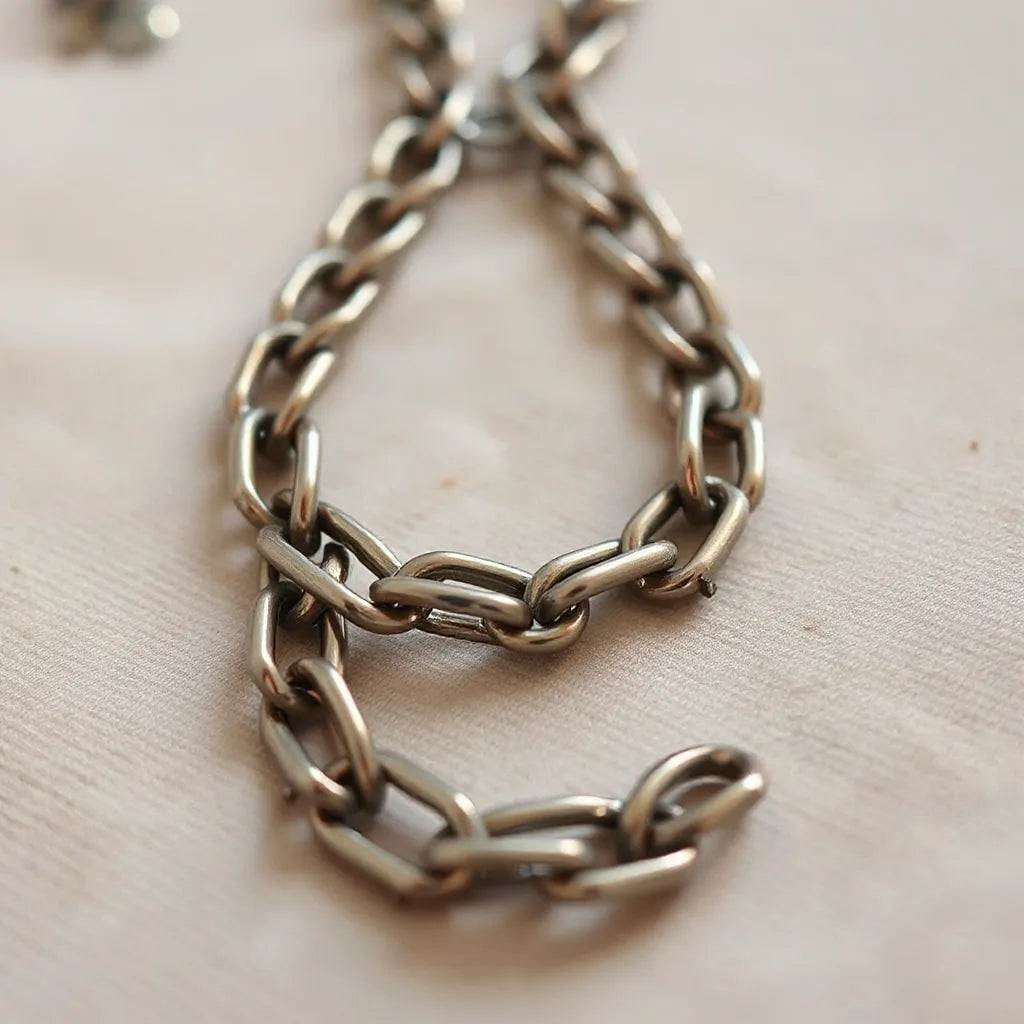
Close-up of interlocked links forming a uniform pattern
6) Embed the chain in a care routine from day one
Finally, create a routine that protects the finish. Wipe the chain with a soft, dry cloth after wear, especially if you have exposed it to lotions, sweat, or hair products. Store it in a dry place, ideally separated from other jewelry to reduce friction and contact marks.
When cleaning, use gentle methods and avoid abrasive tools. For silver jewelry, keep cleaning mild to preserve the surface and reduce the buildup of tarnish over time. Consistent care matters more than aggressive cleaning, because gentle maintenance reduces the need for harsher interventions.
Explore handmade silver jewelry
A Practical Example of Dense Link Styling
A tightly woven chain design can be particularly effective when you want a chain that looks refined on its own and also supports pendants. Dense link structures tend to lay flat and stay visually consistent as they move with you. If you prefer a classic silhouette, a wheat-style pattern can offer a balanced combination of texture and stability.
925 Sterling Silver 2mm Wheat Chain Necklace

This necklace is an example of how dense link styling can support a smooth visual line. The 2mm width is suitable for daily wear and pairs well with many pendant styles. It can also complement layering, since the chain texture remains defined rather than collapsing into uneven folds.
Common Questions Answered
How does tightly woven chain design affect comfort at the neck?
Dense link geometry often lies flatter against the skin, which can improve comfort and reduce friction. When links are closely fitted, the chain usually shifts as a cohesive unit instead of folding randomly. This can help reduce irritation during long wear, especially when you move throughout the day.
Does a tightly woven chain design reduce tangling?
It can. While any chain can tangle under certain conditions, a tightly woven chain design typically offers better structural stability. When the links resist twisting and maintain a consistent drape, the chain is less likely to coil into irregular loops. Proper storage also matters, since friction and contact between chains increase tangling risks.
What clasp features should I look for?
Look for secure closure, smooth operation, and sturdy construction at the connection points. A well-made clasp should close firmly without excessive slack. Also inspect how the clasp sits when closed; a stable clasp helps the chain remain aligned and reduces stress on the links.
How should I clean a silver chain without damaging the finish?
Use gentle cleaning and avoid abrasives. Wipe the chain with a soft cloth after wear, and clean only when needed. If tarnish appears, use methods designed for silver jewelry and follow careful, light handling. For gold vermeil finishes, treat the surface with extra care to preserve tone and prevent over-scrubbing.
Which chain thickness works best for layering?
Layering works best when lengths and thicknesses are balanced. If you want a subtle stack, choose slightly thinner chains. For a stronger visual foundation, select a moderate width with stable drape. Dense designs tend to hold their line, which makes layering appear more intentional.

Layered necklace silhouettes with stable, non-twisting alignment
Summary & Next Steps
A tightly woven chain design combines dense link structure with polished finishing, which can support comfort, stable drape, and a refined look. By evaluating construction, selecting an appropriate thickness, checking clasp reliability, and maintaining a simple care routine, you can choose a chain that performs well in daily life. If you plan to wear pendants or layer multiple pieces, link stability becomes even more important because it helps maintain alignment.
Next, explore a small set of chain styles that match your preferences and build a practical routine around them. Consider browsing collections from Italiabchains, since the company makes jewelry in Italy and ships directly to the customer. This approach supports craftsmanship-focused selection and helps ensure you receive pieces designed for everyday wear.
- Rope chain options for a smooth drape
- Diamond-cut texture with controlled movement
- Singapore chain widths for stronger presence
- Pendant pairing ideas for everyday styling
Disclaimer: This article is for informational purposes only and does not constitute professional advice. Jewelry durability and appearance can vary based on wear habits, environment, and individual care practices. Always follow product-specific care guidance and handle jewelry gently to reduce the risk of damage.
About the Author
Mike Luciano is an experienced jewelry content specialist with expertise in chain construction, material selection, and product guidance for handmade silver jewelry. He focuses on helping customers understand how design features influence comfort, appearance, and long-term wear. With a practical approach to craftsmanship and care, he supports informed buying decisions. You can use this guidance as a baseline, then select the chain that best fits your daily routine and style preferences.
Compartir:
Handmade Italian Jewelry: Care Tips for Everyday Wear
How to Choose the Right 925 Sterling Silver Chain