
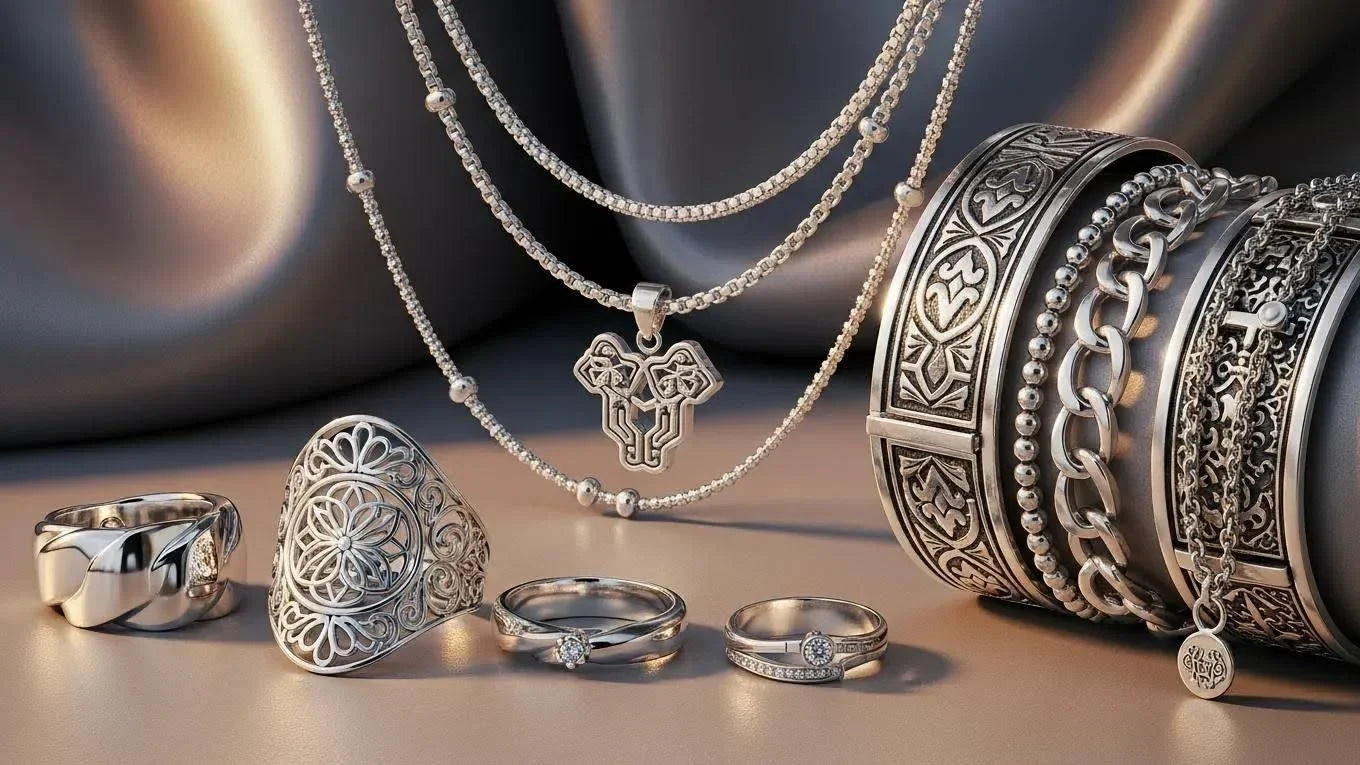

Sterling silver jewelry embodies centuries of craft, culture, and design. In this article, we explore the metal’s origins, celebrate Italian workshops that shaped its style, and explain how to spot authentic pieces.
You’ll discover how historical techniques influence modern designs, why purity standards matter, and simple care tips to keep your jewelry timeless. Whether you collect or wear silver casually, understanding its history helps you choose and care for lasting pieces.
Where Can You Discover The Origins Of Sterling Silver Jewelry?
The story behind sterling silver jewelry begins with ancient societies that valued the metal for its beauty and workability. Sterling silver is an alloy of 92.5% silver and 7.5% other metals, typically copper, which adds strength while retaining silver’s shine.
This balance allowed makers to create detailed, durable items, which is why many silver artifacts from the past remain today as examples of craftsmanship.
Ancient Silver Craftsmanship And Its Influence On Modern Jewelry
Techniques like casting, engraving, and filigree developed long ago still form the core of modern silverwork. Craftspeople from ancient Egypt and Rome refined methods and motifs that designers continue to draw upon. Today’s artisans adapt these classic approaches so that traditional techniques endure in contemporary pieces.
Key Historical Milestones In Sterling Silver Development
Several turning points shaped sterling silver into what we know today. In medieval England, the sterling standard became tied to English coinage and silver purity. The Renaissance sparked a revival in Italy, where artisans crafted elaborate silverware and jewelry, boosting the metal’s artistic status.
Later, the 19th-century Industrial Revolution introduced new production methods, making silver jewelry more accessible and turning it from elite luxury to common adornment. These milestones reflect cultural and technological changes that influenced sterling silver’s style and availability.
Who Can You Learn About From Italian Silver Jewelry Makers And Their Traditions?

Italy’s silversmithing tradition thrives in regional workshops and family studios, where skills pass through generations. Italian sterling silver jewelry is known for intricate finishing, selected materials, and a blend of classical motifs with modern design.
This combination results in jewelry that is both expertly crafted and thoughtfully designed, reflecting a refined artisanal heritage.
Italian Artisans Who Influenced Sterling Silver Design
Italian figures and movements have left strong marks on silver design. Renaissance goldsmith Benvenuto Cellini, famed for his detailed metalwork, influenced decorative silver styles. Artist Giovanni Battista Piranesi inspired decorative motifs with his architectural engravings.
Today, Italian artisans mix traditional silversmithing with new forms and styles, pushing silver into fresh directions. Together, these figures and traditions shaped a unique style that continues to influence global silver trends.
Design Features To Identify Authentic Italian Silver Jewelry
Authentic Italian silver jewelry can show distinct features that help indicate its origin. Key indicators are hallmarks stamped into the metal, indicating silver purity and often including the maker’s ID for authenticity.
The craftsmanship is evident in smooth finishing and traditional techniques that display care and skill. Genuine Italian pieces often feature decorative choices inspired by Italy’s rich artistic past, with classic motifs and regional styles. These traits help collectors and buyers distinguish authentic Italian silver from imitations or lower-quality pieces.
How Can You Tell If Your Italian Sterling Silver Jewelry Is Authentic?
Authenticity can be assessed by examining purity and craftsmanship markers. Hallmarks and quality marks can act as authentication clues on the metal. Common marks include "925" for 92.5% silver, confirming sterling standard compliance. Maker’s marks identify the artisan or manufacturer.
The assay office stamp shows official testing and verification of silver content. These hallmark details are among the clearest indicators of genuine pieces, valuable to collectors and buyers.
Features Confirming The Purity And Authenticity Of Sterling Silver
Besides hallmarks, practical signs confirm sterling silver’s authenticity. Genuine sterling silver has a substantial weight compared to thin silver-plated items. When polished, sterling silver often has a bright, clear sheen, unlike dull or uneven imitations.
Tests help too: because silver is non-magnetic, a magnet test reveals attraction points to base metals. Professional acid tests also confirm purity. Together, these cues reliably assess quality when examining sterling silver jewelry.
How Can You Best Care For And Maintain Your Sterling Silver Jewelry?

Proper care preserves sterling silver jewelry’s beauty and longevity. With consistent maintenance, sterling silver retains its luster and appeal for years. Small, regular habits greatly help keep the metal’s shine and structure.
Best Practices For Cleaning And Preserving Silver Jewelry
Clean pieces regularly using a soft, non-abrasive cloth to remove oils and minor tarnish. Store jewelry in a cool, dry place, ideally in anti-tarnish pouches or wrapped in soft cloth to limit air exposure and slow tarnishing. Avoid contact with chemicals like perfumes, cleaners, and chlorine that damage silver. Remove jewelry before such exposures to protect it.
Proper Care And Its Role In Extending The Life Of Your Italian Sterling Silver Pieces
Regular upkeep prevents tarnish, reduces wear, and preserves the craftsmanship of Italian sterling silver jewelry. It protects the metal from corrosion and damage, maintaining the jewelry’s appearance and meaning. Well-cared-for pieces remain beautiful and wearable for years, often becoming treasured heirlooms passed down through generations.
|
Feature |
Description |
Importance |
|---|---|---|
|
Hallmarks |
Symbols indicating purity and maker |
Authenticity verification |
|
Weight |
Specific weight of genuine silver |
Quality assurance |
|
Color |
Bright, shiny appearance |
Visual confirmation of authenticity |
Italia Chains Craftsmanship Rooted In Tradition And Excellence
At Italia Chains, we are passionate about 925 sterling silver jewelry and its rich heritage. Rooted in Italian tradition, we craft exquisite sterling silver chains and designs blending classic techniques. The Rich History of Sterling Silver Jewelry
The Rich History of Sterling Silver Jewelry with modern aesthetics. Our artisans focus on quality materials and careful finishing so each piece reflects authentic Italian craftsmanship. We believe knowing the history and artistry behind sterling silver enhances the appreciation of every piece.
Frequently Asked Questions
What is the difference between sterling silver and other types of silver?
Sterling silver is 92.5% silver combined with about 7.5% other metals, usually copper, for strength and durability. Fine silver is nearly 99.9% pure but softer and less suited for daily wear. Silver-plated items have a thin silver layer over a base metal that can wear off over time. Knowing these differences helps you choose pieces for your style and use.
How can I tell if my sterling silver jewelry is of high quality?
High-quality sterling silver features clear hallmarks like "925" confirming silver content. Well-made pieces have smooth joins, sharp detailing, and satisfying weight, showing solid construction. Buying from reputable sellers or artisans reduces the risk of low-quality or mislabeled jewelry.
What are some common misconceptions about sterling silver jewelry?
One myth is that all silver jewelry is the same, but purity, making methods, and finishing vary widely. Another is that sterling silver never tarnishes; in truth, air and moisture cause patina or tarnish over time. Also, price alone doesn’t guarantee quality; examining hallmarks and workmanship is more reliable.
Can sterling silver jewelry be repaired if damaged?
Yes, many damaged chains, loose clasps, and scratches can be fixed by professional jewelers. Success depends on the extent of damage, but skilled silversmiths often restore pieces close to their original condition, extending life and preserving sentimental value.
Partager:
The Art Of Crafting 925 Sterling Silver Jewelry
Is 925 Sterling Silver Hypoallergenic? What To Know