
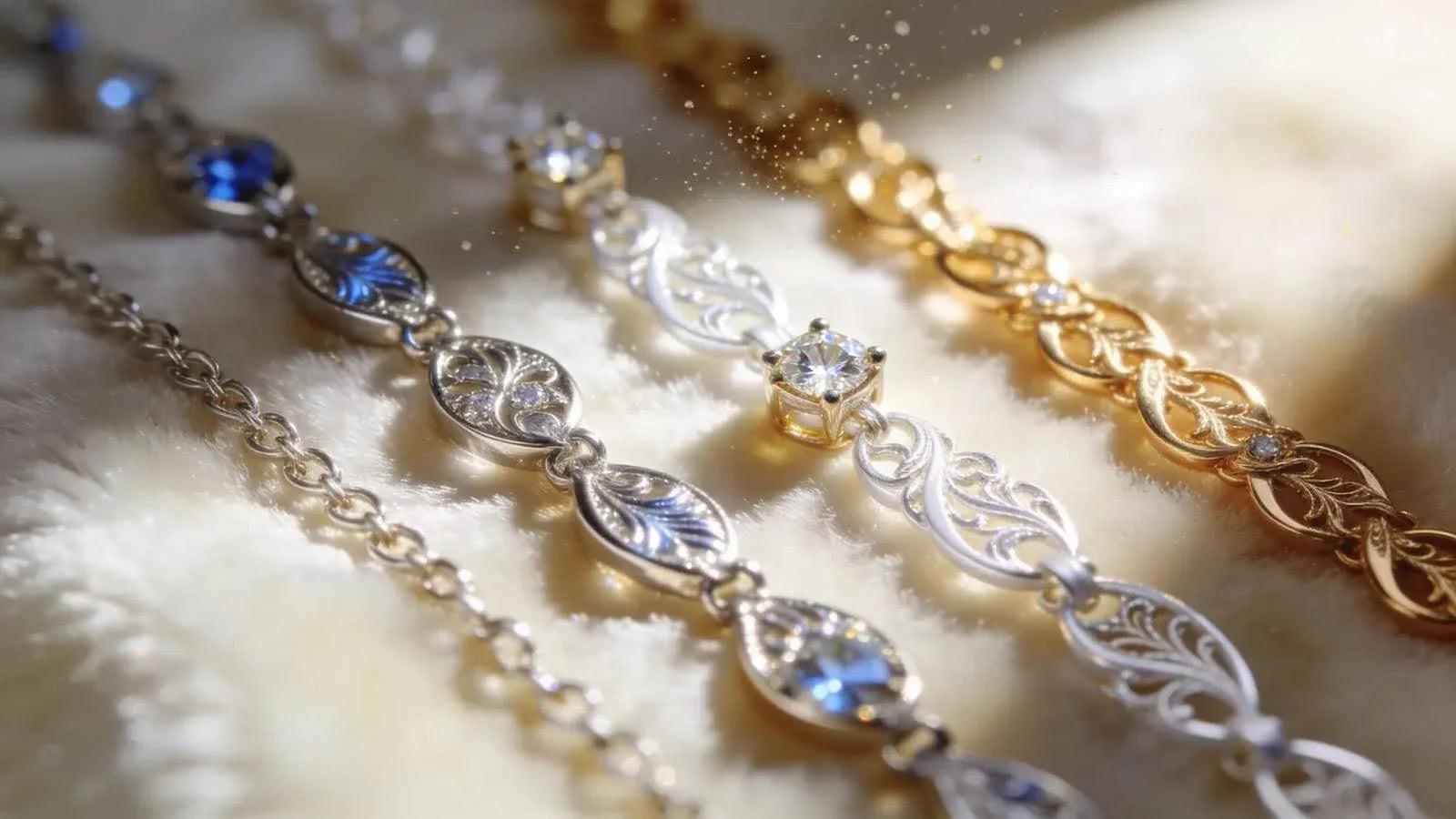
Choosing the right metal for your jewelry requires weighing various factors that affect both its look and practical use. Key considerations include cost, durability, maintenance, and personal style. Sterling silver and white gold are popular options, each with distinct qualities that suit different preferences.
Beyond appearance, compare price, durability, maintenance, and potential skin sensitivity. Craftsmanship can also affect a piece’s finish and construction. Today, this article explores these points to guide you toward jewelry that matches your style, lifestyle, and budget.

Want To Know How Sterling Silver And White Gold Will Fit Your Budget?
The cost of jewelry made from sterling silver and white gold varies based on metal composition, craftsmanship, and market conditions. Understanding how these factors interact will help you make an informed decision that suits both your style preferences and financial plan.
Consider the initial purchase price and likely maintenance costs. Also consider resale value, which can vary by design, condition, and market demand.
Factors Affecting Silver Jewelry Cost Compared To White Gold Pricing
Sterling silver is composed of 92.5% silver, typically alloyed with copper. It is generally more affordable due to silver’s lower raw material cost and its abundant availability. White gold is created by alloying yellow gold with metals such as palladium or nickel. Its price is often higher because gold has greater intrinsic metal value.
Market Trends Influencing Silver And White Gold Jewelry Prices
Jewelry prices are impacted by market demand, global metal prices, and economic factors. Gold generally shows more stable value and steady growth compared to silver, which tends to be more volatile. This volatility affects the relative cost and investment potential of white gold and sterling silver pieces, making gold a more consistent store of value while silver can fluctuate significantly.
Looking For Jewelry That Matches Your Lifestyle? Discover Which Metal Handles Wear And Care Best
Understanding the maintenance demands and durability of these metals will help you choose jewelry that fits your lifestyle. Consider how often you will wear the piece and the environments it will face. Also consider whether you are comfortable with periodic upkeep. The right balance ensures your jewelry remains both beautiful and practical for daily use or special occasions.
Tarnish Resistance Differences Between Silver And White Gold
Sterling silver is known to tarnish when exposed to air and moisture, necessitating regular cleaning to maintain its shine. White gold, in contrast, is more resistant to tarnishing. However, white gold often has rhodium plating for a bright white finish. This surface layer can wear over time and may need replating.
Maintenance Needed To Preserve Silver And White Gold Jewelry
Sterling silver jewelry requires routine polishing and protected storage to avoid tarnishing and scratches. Maintaining its shine involves periodic cleaning and careful handling. White gold may need occasional rhodium replating to restore its bright white surface. Gentle cleaning helps preserve its finish.
Wondering If Sterling Silver Or White Gold Is Right For Your Sensitive Skin?
Choosing the right metal for sensitive skin involves understanding the potential allergens and protective treatments involved. Consider your individual metal sensitivities before buying. Ask a jeweler about the alloy and any protective plating used on the piece.
Hypoallergenic Properties Of White Gold And Sterling Silver
Sterling silver is usually alloyed with copper, so people with metal sensitivities should confirm the exact alloy. White gold may contain nickel, which is a common allergen; however, there are nickel-free white gold options available. Awareness of these components is essential when selecting jewelry for those prone to allergic reactions.
How Rhodium Plating Improves White Gold’s Hypoallergenic Quality
Rhodium plating provides a protective, non-reactive barrier that minimizes skin contact with allergens such as nickel. This plating significantly enhances the suitability of white gold for allergy-prone wearers by reducing the likelihood of irritation, making rhodium-plated white gold a safer choice for sensitive skin.
How Craftsmanship Affects Jewelry Quality
Italian craftsmanship not only enhances the visual appeal but also the cultural significance and value of silver and white gold jewelry. The fusion of traditional artisan techniques with modern innovation brings forth pieces that embody history, elegance, and superior artistry. Owning jewelry crafted in Italy means embracing a heritage of quality and sophistication that elevates any collection.
Unique Design Elements Of Italian Silver And White Gold Jewelry
Italian jewelry is distinguished by the incorporation of romantic and historic motifs, detailed hand-engraving, filigree, and intricate repoussé work. These elements imbue the pieces with distinctive elegance and emotional resonance, making Italian designs highly prized and recognized worldwide for their artistic and cultural depth.
Italian Artisan Techniques Enhancing Metal Quality And Appearance
Traditional Italian methods emphasize meticulous hand-finishing, precise setting techniques, and rigorous quality control to elevate both sterling silver and white gold jewelry. These artisan techniques, combined with hallmark certification, ensure lasting beauty, authenticity, and superior construction.
Discover Italia Chains: Excellence In Jewelry Craftsmanship And Service
At Italia Chains, we pride ourselves on offering exquisite sterling silver and white gold jewelry that embodies the finest Italian craftsmanship discussed throughout this article. We understand the importance of selecting jewelry that balances cost, durability, style, and hypoallergenic qualities to suit your unique needs and lifestyle.
We offer meticulously crafted pieces that showcase not only the beauty but also the lasting value of high-quality metals combined with traditional artisan methods. Our team is committed to providing personalized service, guiding you through our collections with expertise and care to help you find jewelry that truly resonates with your aesthetic and practical preferences.
Frequently Asked Questions
What is the lifespan of sterling silver vs. white gold jewelry?
The lifespan of jewelry largely depends on care and maintenance. Sterling silver can last a lifetime if properly cared for, but it requires consistent polishing to avoid tarnishing. White gold is generally more durable due to its alloy composition and rhodium plating, which enhance its resistance to scratches and tarnishing.
Can sterling silver be turned into white gold?
Sterling silver cannot be transformed into white gold, as they are different metals with distinct compositions. Sterling silver is 92.5% silver combined with metal alloys, usually copper, while white gold is an alloy of yellow gold and other metals such as palladium or nickel.
Is silver jewelry a better investment than white gold?
Investment potential varies between sterling silver and white gold. While sterling silver tends to be more affordable, its market value can fluctuate significantly, making it less stable as an investment. White gold, on the other hand, typically retains its intrinsic value more steadily due to being alloyed with precious gold.
How do you clean and maintain my sterling silver and white gold jewelry?
To maintain sterling silver, use a silver polishing cloth regularly and store it in a cool, dry place. Avoid exposing it to harsh chemicals and humid environments to prevent tarnishing. For white gold, gentle cleaning with a mild soap or jewelry cleaner is sufficient, and periodic rhodium replating is essential to maintain its bright appearance.
Partager:
Understanding Gold Vermeil Vs. Gold Plated: Key Differences
Christmas Sterling Silver Jewelry Gift Guide For Men