
Updated on: 2026-05-05
Quality silver craftsmanship is more than a finishing detail. It is the result of careful design, correct material selection, and consistent workmanship. When makers control every step, the jewelry wears better and looks refined for longer. This guide explains the myths people hear most often, shares practical signs of quality, and offers a simple checklist for choosing silver pieces. You will also learn how to connect craftsmanship to everyday wearing and maintenance.
What Quality Silver Craftsmanship Actually Means
How to Evaluate Craftsmanship Before You Buy
Care and Daily Wear That Preserve Beauty
TLDR
Quality silver craftsmanship delivers better fit, stronger construction, and more consistent shine over time. You can judge quality with clear signals such as hallmark accuracy, uniform surface finishing, and thoughtful clasp and link engineering. Choose makers who produce in-house, document materials, and ship with care. For longevity, store properly and clean gently with the right routine.
Table of Contents
4. What Quality Silver Craftsmanship Actually Means
5. How to Evaluate Craftsmanship Before You Buy
6. Care and Daily Wear That Preserve Beauty
7. Why Handmade Silver Jewelry from Italy Matters
Introduction
Choosing silver jewelry can feel simple at first. Many designs look similar in photos. However, the difference between average and exceptional pieces often comes down to quality silver craftsmanship. When workmanship is strong, the jewelry behaves well on skin, stays comfortable, and maintains a clean look despite daily movement. This article breaks down how to recognize real craftsmanship, how to protect it, and why handmade silver jewelry made in Italy can be a meaningful advantage.
Myths vs. Facts
- Myth: Any 925 silver piece is automatically high quality. Fact: Marking alone does not guarantee excellent finishing, stable link construction, or precise sizing.
- Myth: Shiny surfaces always mean better workmanship. Fact: Gloss can be achieved quickly, while durable finishing comes from method, time, and consistent polishing.
- Myth: Heavier jewelry always lasts longer. Fact: Strength and longevity depend on engineering, join placement, and how components are formed.
- Myth: Maintenance is unnecessary once the jewelry arrives. Fact: Proper cleaning and careful storage help reduce tarnish and keep details crisp.
- Myth: Chain and clasp quality are minor details. Fact: These areas experience the most stress during wear, so craftsmanship here matters greatly.
Personal Experience
I have seen many silver pieces that look impressive at first glance. The ones that truly impressed me were the ones that also felt reliable in daily use. A well-made chain laid flatter, links moved smoothly, and the clasp closed with confidence. Over time, the surface remained even and the edges stayed defined rather than becoming dull or uneven. That experience taught me that quality is not only visible, it is functional.

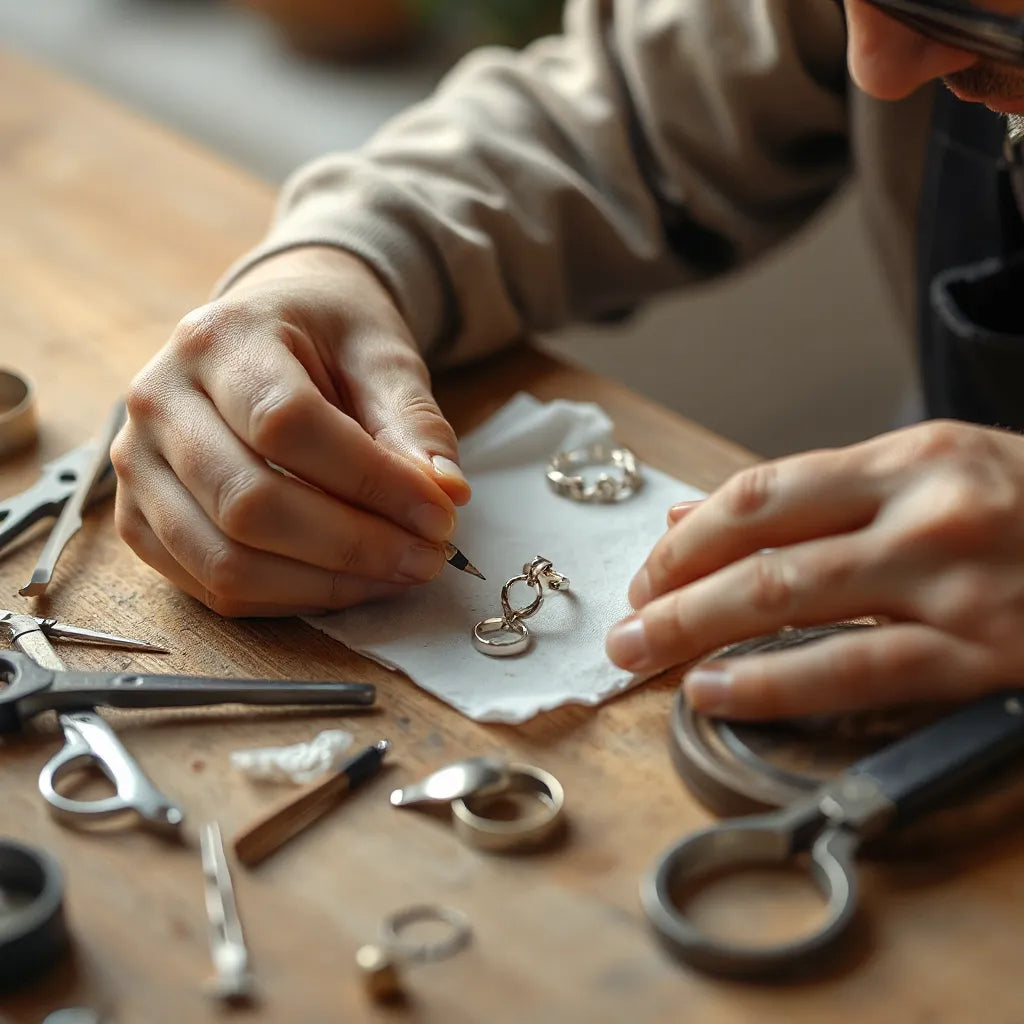
Close-up visual of even polishing and alignment
What Quality Silver Craftsmanship Actually Means
Quality silver craftsmanship is best understood as a set of repeatable decisions. It starts with selecting the right alloy and using design choices that support everyday movement. It continues with forming, assembling, finishing, and quality checks. Finally, it ends with packaging and shipping practices that reduce the chance of scratches or deformation during transit.
Material choice and alloy consistency
Most shoppers focus on 925 silver, which indicates sterling silver content. Beyond the label, quality depends on consistent alloy behavior. Jewelry makers who work carefully with material characteristics can produce surfaces that remain stable and details that stay crisp. This is especially relevant for chains, rope textures, and small link structures.
Construction that respects stress points
Jewelry is not static. Chains bend, clasps move, and pendants shift with motion. Strong craftsmanship anticipates this. It uses well-planned join points, reliable closure mechanisms, and link shaping that reduces friction. As a result, the piece avoids early loosening and keeps its original geometry longer.
Finishing that improves both look and feel
Finishing includes more than brightness. It includes smoothing edges, evening out texture, and refining contours so the jewelry sits comfortably. When the finish is done with care, the piece feels smooth against skin and catches light in a balanced way.
When a maker controls these elements, quality becomes measurable through comfort, alignment, and consistent appearance across time.
How to Evaluate Craftsmanship Before You Buy
You can assess craftsmanship quickly if you know what to check. The goal is to look for evidence of careful work rather than marketing language. Use the checklist below to evaluate design, construction, and finish with confidence.
1) Confirm hallmarks and material clarity
Look for clear labeling that matches the promised alloy, such as 925 sterling silver or gold vermeil where applicable. Reliable sellers provide accurate product descriptions and consistent specifications. If a piece has a hallmark, verify that it aligns with the product claims.
2) Inspect surface uniformity and edges
Even polishing and clean edges often signal controlled finishing. If texture appears patchy or edges look rough, the piece may have been rushed. For rope styles, consistent pattern definition matters because the eye notices uneven spacing quickly.
3) Evaluate chain mobility and link behavior
Ask how the chain drapes. A good chain typically moves freely without twisting excessively. This is a craftsmanship issue. It results from link shaping and join alignment, not only from the design name.
4) Assess clasps and closures
Closures handle repeated use. Quality craftsmanship includes smooth operation and a secure hold. Even small details, such as how the clasp engages and how it sits when closed, affect user comfort.
5) Choose trusted craftsmanship sources
Handmade silver jewelry from Italy can be a strong indicator of craft focus. When the maker produces locally and manages production carefully, the shop can maintain consistency. At Italia Chains, many collections are designed for durability and crafted with an attention to details that shoppers can feel on the first wear. This approach aligns with a simple principle: control is a quality advantage.
For inspiration on texture and chain engineering, you may also review options such as the Italian rope chain necklace and compare how pattern and scale appear across sizes.
Below is an example of a craftsmanship-focused accessory that shoppers often choose for daily wear.
925 Sterling Silver 2mm Diamond Cut Rope Bracelet

This bracelet type typically highlights how diamond-cut surfaces and rope link formation interact with light. The strongest versions feel smooth at contact points while maintaining crisp definition in the pattern. If you prefer a rope style, you can explore the same product line at 2mm rope link bracelet to compare finishing notes across finishes.
Care and Daily Wear That Preserve Beauty
Craftsmanship helps a piece start strong, but responsible care helps it stay strong. Silver jewelry can develop tarnish over time due to natural exposure. The objective is not to eliminate all change. The objective is to slow it, keep surfaces even, and protect fine details such as rope texture and diamond-cut edges.
Practical cleaning routine
Use gentle cleaning methods. Soft cloths help remove fingerprints and everyday residue without aggressive rubbing. If you use a cleaning product, ensure it is suitable for sterling silver. Overuse of harsh chemicals can dull reflective surfaces and soften fine detailing.
Storage habits that prevent micro-scratches
Store pieces separately when possible. Chains can rub against other metal surfaces and create small scratches that become visible as tarnish develops. A lined storage pouch or compartment supports a calmer wear pattern.
Wear considerations that protect structure
Avoid impacts that bend links or nick clasps. Remove jewelry before heavy work or activities where friction is likely. If a bracelet or chain frequently catches on fabric, craftsmanship can still help, but the best practice is to reduce pull and snag points.

Symbolic icons of gentle cleaning and secure storage
Why Handmade Silver Jewelry from Italy Matters
Handmade silver jewelry from Italy is often associated with craft discipline and attention to detail. When production is local, makers can manage tolerances and inspect components more consistently. That consistency tends to show up in finishing quality, clasp alignment, and how rope patterns remain defined.
In addition, Italian design culture frequently emphasizes wearable proportions. This matters for silver craftsmanship because jewelry is judged in motion as much as it is judged at rest. A rope chain that drapes well can look refined even when worn daily. A clasp that sits smoothly improves comfort and reduces the temptation to leave the piece unworn.
Consistency across collections
Many shoppers switch between necklace, bracelet, and pendant styles. A maker that follows consistent manufacturing processes can maintain a similar look across product families. That means your set can feel like a coordinated collection rather than a random mix.
If you want to evaluate workmanship at the pendant and closure level, consider comparing different chain widths and finishes on the site. For example, you can view the Singapore chain necklace and compare how texture changes at different scales. For rope styles with crisp detailing, the diamond-cut rope necklace provides another useful comparison point.
You may also find it helpful to explore the broader craft perspective from Johny Luna, especially if you value design narrative alongside material quality. This article focuses on silver workmanship, but observing craftsmanship across categories can improve your buying intuition.
Final Thoughts & Takeaways
Quality silver craftsmanship combines material control, thoughtful construction, and careful finishing. It also depends on how the maker anticipates real wear. The myths often distract shoppers from the practical signals that matter, such as consistent surfaces, dependable closures, and stable link behavior.
Use a simple evaluation checklist: confirm specifications, inspect uniformity, check chain mobility, and consider clasp engineering. Then protect your investment with gentle cleaning and responsible storage. Handmade silver jewelry from Italy can offer an extra layer of consistency because production processes are managed closely and the work is done with a craft-first mindset.
If your goal is long-term satisfaction, choose pieces that feel reliable the moment you put them on. That is the strongest proof of quality.
Q&A Section
How can I tell whether a silver chain has strong craftsmanship?
Look for uniform link spacing, smooth edges, and a clasp that closes securely without resistance. A well-made chain also drapes naturally and avoids excessive twisting. In product descriptions, reliable makers explain materials and construction, which helps you judge quality beyond appearance.
Does diamond-cut detailing improve durability, or is it only visual?
Diamond-cut detailing is largely a finishing and light-reflection technique. However, the way the cuts are executed can affect how the surface performs during daily wear. Carefully finished edges reduce snagging and help the texture remain crisp longer. Durability still depends on overall construction and join placement.
What is the best way to reduce tarnish on sterling silver?
Reduce exposure to residue and moisture by wiping the jewelry gently after wearing and storing it properly. Use a soft cloth and avoid harsh abrasion. When you need deeper cleaning, choose methods appropriate for sterling silver and avoid frequent over-cleaning that can gradually dull reflective surfaces.
Why should I buy handmade silver jewelry from a maker that ships directly?
Direct shipping can reduce handling steps that sometimes lead to scratches or packaging wear. It also supports traceability of the product and helps ensure you receive the piece as prepared by the maker. Quality craftsmanship benefits from careful packaging because fine finishes require protection during transit.
Are sterling silver and gold vermeil the same in terms of care?
They are not the same. Sterling silver care focuses on preventing tarnish and controlling surface wear. Gold vermeil adds a plated layer on top of silver, so gentle cleaning and reduced abrasion become especially important. Always follow the care guidance associated with the specific finish.
About the Author
Mike Luciano
Mike Luciano is a jewelry quality and craftsmanship specialist with expertise in evaluating metals, finishing methods, and wearable engineering. He focuses on helping customers make confident choices by connecting material specifications to real-world comfort and longevity. His work emphasizes practical assessment and clear buying guidance. He appreciates thoughtful design and encourages a careful approach to everyday silver jewelry care.
Disclaimer: This article is for informational purposes only and does not provide professional or guaranteed performance results for any specific product. Always review product specifications, care guidance, and handling instructions from the seller before purchase and use.
Partager:
Italian Craftsmanship in Jewelry: A Guide to Quality
Bold Statement Jewelry for Men: Style and Pairing Tips