
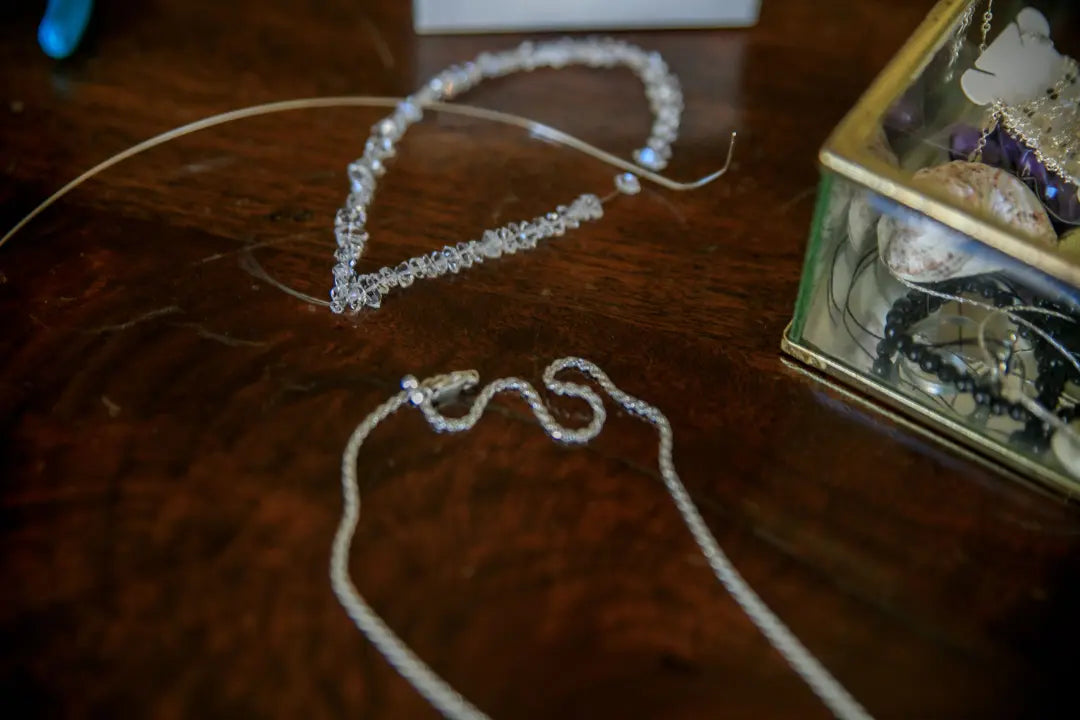
Hand-finishing transforms jewelry from a manufactured piece into a refined final product. After casting, forming, soldering, or assembly, artisans may file edges, smooth surfaces, polish metal, refine textures, clean joints, engrave details, and inspect each piece carefully.
These final stages affect appearance, comfort, durability, and overall quality. Italian jewelry is often associated with careful finishing and skilled metalwork, but true craftsmanship depends on execution rather than labels. Understanding hand-finishing helps buyers recognize quality workmanship and appreciate differences in value.
Why Is Hand-Finishing Important in Jewelry Making?
Hand-finishing refers to work carried out after or between the main manufacturing stages to refine the appearance and function of jewelry. A casting, for example, may emerge with sprue attachment points, subtle surface irregularities, or rough areas that need to be removed.
A soldered chain may require cleanup around its joints. An engraved or textured design may need selective polishing so the decorative details remain visible. These steps require control because removing too much metal can alter dimensions or soften important details.
Good finishing also affects comfort. Sharp edges, rough interiors, poorly finished clasps, and visible seams can make a piece unpleasant to wear even when the underlying design is attractive. Hand-finishing therefore combines aesthetics with practical quality control.

How Hand-Finishing Improves Jewelry Appearance
The way light reflects from metal depends heavily on its surface. Highly polished jewelry reflects light differently from brushed, satin, hammered, or oxidized surfaces. An artisan can use finishing techniques to create contrast between different parts of the same piece.
A pendant might have polished raised areas and darker recessed details. A chain may be polished so individual links catch the light consistently. Engraved jewelry can be finished carefully so polishing does not erase fine lines. This control over texture and reflectivity helps give jewelry its final visual identity.
Hand-finishing can also correct minor manufacturing marks. Filing, sanding, and polishing may remove visible seams or casting imperfections while preserving the intended shape.
How Does Hand-Finishing Enhance Quality in Italian Jewelry?
Italian jewelry manufacturing includes everything from highly automated chain production to small artisan workshops. Handwork and modern machinery can therefore exist within the same production process. A piece may be formed using specialized equipment and then inspected, assembled, polished, engraved, or adjusted by hand.
That combination should not be considered inferior to purely manual production. Modern equipment can provide consistency, while skilled finishing allows an artisan to make judgments that depend on sight, touch, and experience.
Italia Chains describes itself as a manufacturer of both machine-made and handmade 925 sterling silver chains and states that its jewelry production is based in Arezzo, Italy. The company also specifically describes hand polishing as part of its approach to Italian jewelry production.
Importance of Attention to Detail in Jewelry Finishing
Minor flaws can become highly visible once jewelry is polished. A poorly cleaned solder joint, uneven link, rough edge, or deep tool mark may catch the eye immediately when surrounded by a reflective finish. Artisans therefore inspect jewelry from multiple angles during finishing.
They may move through progressively finer abrasives before polishing, rather than attempting to create a mirror finish immediately. Working gradually helps remove deeper marks instead of simply polishing around them.
Edges and connection points deserve particular attention because they affect both appearance and comfort. A well-finished piece should feel intentional throughout, including areas that are not immediately visible when it is worn.
What Hand-Finishing Techniques Are Commonly Used in Jewelry?
There is no single hand-finishing process suitable for every design. The techniques used depend on the metal, construction method, surface texture, gemstones, and appearance the designer wants to achieve.
Filing and Sanding Techniques for Jewelry Refinement
Filing is one of the basic methods used to remove excess metal and refine shape. After casting, sprues may need to be cut away before the remaining attachment point is filed smooth. Soldered joints may also require careful cleanup. Files are available in different shapes and levels of coarseness, allowing artisans to reach flat surfaces, curves, corners, and narrow spaces. Sanding usually follows filing.
Artisans can progress through increasingly fine abrasive grades to remove scratches left by earlier stages. Skipping too quickly to a fine abrasive can leave deeper marks behind, which may become even more noticeable after polishing. Precision is especially important around decorative details because excessive sanding can flatten textures or change proportions.
Hand-Polishing Techniques for a Refined Jewelry Finish
Polishing produces the reflective surface commonly associated with fine jewelry. The process may involve polishing compounds, brushes, buffs, or other tools selected according to the metal and desired finish. The goal is not simply to make jewelry shiny.
A skilled artisan needs to maintain crisp edges and design details while producing an even surface. Over-polishing can round sharp lines, reduce engraving depth, and gradually remove metal. Some designs intentionally combine polished and matte areas. In these cases, the artisan must control exactly where the polishing takes place.
Italia Chains states that polishing and attention to finish form part of its approach to Italian silver jewelry, alongside both handmade and machine-produced manufacturing.
Creating Brushed, Satin, and Textured Jewelry Finishes
Not every high-quality piece should have a mirror finish. Brushed and satin finishes create softer surfaces with controlled directional marks. These finishes can make jewelry appear understated and can reduce the visibility of minor everyday scratches.
Texture may also be produced through hammering, engraving, specialized abrasives, or other tools. Consistency is essential.
An accidental scratch is a defect. A deliberately applied series of fine lines covering a surface evenly is a finish. That distinction demonstrates why finishing requires both technical control and aesthetic judgment.
Role of Engraving in Hand-Finished Jewelry
Engraving removes small amounts of metal to produce lines, patterns, lettering, or decorative imagery. Traditional hand engraving requires control over depth, direction, and pressure. Modern jewelry may also use machine or laser engraving.
Hand engraving can introduce subtle variations associated with manual work, while mechanical systems can offer excellent repeatability. Neither approach automatically determines quality. Finishing around engraving is particularly important. Heavy polishing after engraving can soften the lines, so artisans must balance surface refinement with preservation of detail.
Are Filigree, Granulation, and Lost-Wax Casting Hand-Finishing Techniques?
Filigree, granulation, and lost-wax casting are often discussed alongside handcrafted jewelry, but technically they should not all be described as hand-finishing methods. They belong to broader jewelry-making and decorative processes.
Filigree as a Demonstration of Fine Metalworking Skill
Filigree typically involves fine wires that are twisted, shaped, arranged, and joined to create delicate decorative structures. The technique requires careful control because thin components can easily become distorted.
After assembly, the work may still require hand-finishing to clean connection points and achieve the desired surface without damaging the fine wire. Filigree therefore demonstrates craftsmanship, but the construction process itself is more than simply a finishing technique.

Role of Granulation in Artisan Jewelry
Granulation involves arranging very small metal spheres on a surface to form decorative patterns. The technique has ancient origins and demands precise control over placement and joining. As with filigree, granulation is better understood as a decorative construction method.
The finished piece may subsequently be cleaned, polished, or otherwise refined by hand while preserving the small granules.
Relationship Between Lost-Wax Casting and Hand-Finishing
Lost-wax casting is a manufacturing process used to create metal forms from a wax pattern. The wax model is surrounded by investment material and removed through heating, leaving a cavity that can receive molten metal. Casting produces the basic metal object, but substantial finishing may follow.
Sprues must be removed, surfaces cleaned, casting marks refined, and details polished or textured. Therefore, lost-wax casting and hand-finishing often work together, but they are separate stages of jewelry production.
Does Hand-Finished Jewelry Last Longer Than Machine-Made Jewelry?
Hand-finishing can improve quality, but it does not automatically make jewelry more durable than machine-made alternatives. Durability depends on metal composition, design, dimensions, construction, soldering, clasps, stone settings, wear habits, and overall manufacturing quality.
A precision-manufactured chain made from appropriate materials may be extremely durable. A poorly designed handmade chain may fail quickly. The real advantage of skilled hand-finishing is that an artisan can identify and refine specific details.
Rough edges can be removed. Joints can be inspected. Clasps can be adjusted. Surfaces can be checked for defects. This additional attention can contribute to quality when it forms part of a well-controlled manufacturing process.
Why Is Italian Craftsmanship Associated With Hand-Finished Jewelry?
Italy has a long history of goldsmithing and silversmithing, supported by established jewelry-manufacturing areas such as Arezzo, Vicenza, and Valenza. Modern Italian jewelry production combines heritage with contemporary technologies.
The important characteristic is not a rejection of machinery. It is the ability to combine design knowledge, technical manufacturing, material understanding, and skilled finishing.
Italia Chains states that it was founded in Arezzo in 2004 and manufactures both handmade and machine-made sterling silver chains. Its current description emphasizes the combination of manufacturing technology, hand finishing, and Italian silver-working traditions rather than presenting every item as entirely handmade.
What Role Do Craft Traditions Play in Preserving Italian Jewelry Skills?
Historically, craft guilds played an important role in organizing trades, regulating workmanship, and transferring skills between experienced craftspeople and apprentices.
Modern Italy no longer depends on medieval-style guild structures for jewelry production. Today, technical schools, artisan workshops, industry organizations, manufacturers, experienced craftspeople, and apprenticeships all contribute to maintaining specialized skills. Knowledge is often transferred through practical experience.
Learning how much pressure to apply during polishing, how to clean a difficult joint, or how to preserve a delicate surface texture requires more than reading written instructions. These judgments develop through repeated practice.
Why Can Hand-Finished Jewelry Cost More?
Labor is one of the main reasons. Hand-finishing requires skilled workers and additional production time. A complex piece may need several stages of filing, sanding, polishing, engraving, assembly, and inspection before it is ready for sale. Intricate designs can take substantially longer to finish than simple ones.
The price may also reflect the quality of materials, manufacturing location, design development, brand reputation, and production volume. However, buyers should not assume that higher prices automatically prove superior craftsmanship.
How Can Buyers Recognize Quality Hand-Finished Jewelry?
Start by examining the surfaces. Polished areas should appear even rather than patchy. Matte or brushed textures should look deliberate. Edges should feel smooth unless sharpness is an intentional part of the design. Look closely at soldered joints, clasps, links, settings, and connection points.
A necklace should move naturally without links catching unexpectedly. Clasps should open and close securely. Stones should appear properly positioned. Symmetrical designs should generally look balanced unless deliberate variation is part of the artistic concept.
Buyers should also consider material descriptions and markings. A beautiful finish cannot compensate for misleading claims about metal purity, origin, or construction.
How Does Italia Chains Approach Italian Craftsmanship and Finishing?
Italia Chains currently describes itself as a direct manufacturer established in Arezzo and producing 925 sterling silver jewelry through both handmade and machine-assisted methods. The company states that it works with Italian silversmiths and emphasizes hand polishing, detailed finishing, and direct manufacturing as parts of its production approach.
Its product positioning is therefore a useful example of how contemporary Italian jewelry can combine manufacturing technology with artisan skills rather than treating the two methods as opposites. The company also says it lists product weights, dimensions, and materials to help buyers understand what they are purchasing.
For customers, these practical details are more useful indicators than relying only on broad phrases such as “luxury” or “handcrafted.”
Experience Italian Hand-Finishing With Italia Chains
At Italia Chains, we believe the final details matter. We manufacture Italian jewelry with a strong focus on construction, polishing, finish, and overall appearance. Our company was founded in Arezzo, Italy, in 2004.
Our collection includes both handmade and machine-made 925 sterling silver chains. Skilled finishing remains important regardless of the production method. Our Italian craftsmen hand-polish chains and apply careful finishing to their details.
At Italia Chains, we manufacture our jewelry directly instead of operating only as a reseller. This gives us greater involvement in production and quality control. It also allows us to offer factory-direct pricing without traditional retail middlemen.
Frequently Asked Questions
What Does Hand-Finished Jewelry Mean?
Hand-finished jewelry has been manually refined after major manufacturing stages such as casting, forming, soldering, or assembly. An artisan may file edges, smooth surfaces, polish metal, clean joints, refine textures, engrave details, and inspect the piece. Hand-finishing does not necessarily mean the entire item was made by hand.
Is Hand-Finished Jewelry Better Than Machine-Made Jewelry?
Not automatically. Machine-made jewelry can offer excellent consistency and durability, while hand-finishing can improve surface quality, comfort, detail, and final appearance. Many high-quality pieces combine precise machine production with skilled manual polishing, inspection, assembly, or adjustment.
Why Does Hand-Finished Jewelry Often Cost More?
Hand-finishing requires additional labor, time, and specialist skills. Detailed pieces may need filing, sanding, polishing, engraving, texturing, assembly, and repeated inspection before completion. These extra production stages can increase the final price, particularly when the jewelry also uses valuable metals, complex designs, or specialist craftsmanship.
How Can You Recognize Good Hand-Finishing in Jewelry?
Look for smooth edges, even polishing, controlled textures, clean joints, secure clasps, balanced proportions, and carefully finished connection points. Decorative details should remain sharp rather than appearing softened by excessive polishing. High-quality finishing should also make the jewelry feel comfortable and intentional from every angle.
Share:
The Right Silver Jewelry for Every Event
Understanding the Lost-Wax Casting Process