
Updated on: 2026-07-24
Bamboo kitchen utensils are an attractive option for everyday cooking and serving. They are lightweight, comfortable to grip, and often perceived as a more sustainable alternative to certain wood or plastic choices. Proper care helps maintain their performance and appearance over time. This guide explains how to evaluate quality, choose the right tools for your kitchen tasks, and extend utensil lifespan with simple maintenance habits.
Introduction to Bamboo Kitchen Utensils
Bamboo kitchen utensils have become a common choice for people who want a natural look, smooth handling, and practical kitchen performance. Their appeal is not only visual. Many home cooks appreciate the balance of flexibility and strength that makes everyday tasks feel controlled, from stirring sauces to portioning rice.
Compared with utensils that are made from more synthetic materials, bamboo is often lighter and comfortable during long meal prep sessions. Bamboo also aligns with a broader trend toward more responsible materials, especially when manufacturers source bamboo from well-managed farms. However, “bamboo” is a category, not a guarantee of quality. The way utensils are processed, finished, and sealed can strongly affect longevity and hygiene.
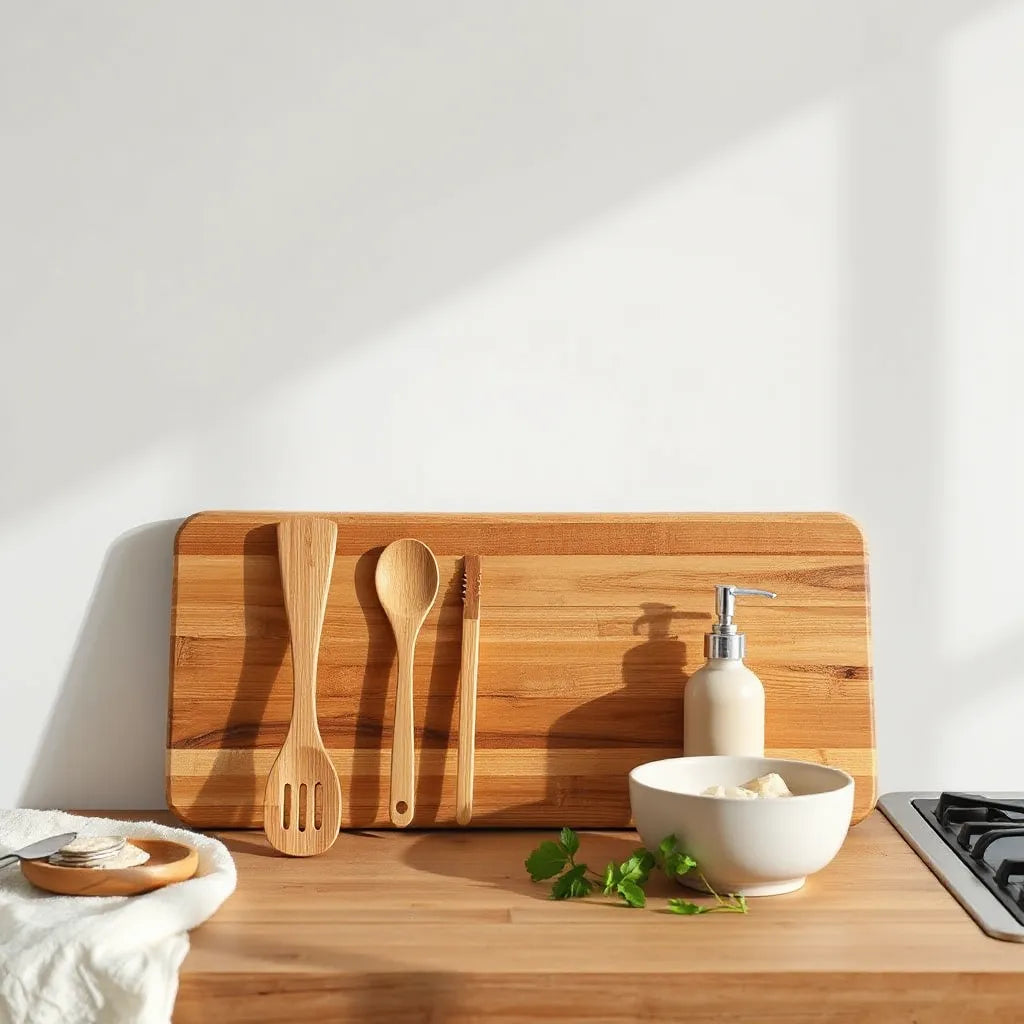
Product Spotlight: A Versatile Bamboo Spoon Set
When a kitchen demands flexibility, a bamboo spoon set is often one of the most useful starts. These sets typically include multiple spoon shapes and sizes that support stirring, serving, and portion control. For many households, the real advantage is coverage: you can match the spoon profile to the task rather than relying on a single generic tool.

Symbolic tools: bowls, utensils, and water droplets
In a quality set, you will notice fine surface finishing and consistent thickness across pieces. Smooth edges matter because they help prevent scratching on cookware and reduce snagging when you clean. Another indicator of thoughtful design is the handle length. Longer handles provide better leverage and help keep hands away from simmering liquids. Short handles can be helpful for small pots, but they require more careful positioning.
To assess practical value, consider how you cook most often. If you frequently stir soups, sauces, or gravies, you may benefit from a spoon with a deeper bowl. If you handle pasta frequently, a slotted profile can improve draining and serving. If you serve grains or beans, a wider head can reduce the number of passes required to portion evenly.
If you also maintain your kitchen with a “small batch” approach, you may find that bamboo kitchen utensils pair well with rotating your tools regularly. This supports even wear distribution and makes it easier to replace individual pieces instead of the entire collection.
Did You Know?
- Bamboo grows quickly, and many producers market bamboo as a renewable raw material.
- The feel of bamboo can be more comfortable than heavier utensils, especially during extended cooking sessions.
- Surface finish strongly influences cleaning ease and resistance to staining.
- Proper drying reduces lingering moisture that can contribute to odors and surface degradation.
Pros & Cons Analysis
- Pros: Lightweight grip for everyday use; natural, kitchen-friendly appearance; typically easy to handle while stirring.
- Pros: Often suitable for many cooking styles when used at moderate heat levels.
- Pros: Can be an appealing choice for those seeking alternatives to plastic and certain treated woods.
- Cons: Bamboo utensils require careful drying; leaving them wet can shorten lifespan.
- Cons: Very high heat and direct flame can accelerate wear and cracking.
- Cons: Low-quality finishes may stain or absorb odors over time.
These points are practical, but the strongest outcome usually depends on how you maintain the utensils and how the manufacturer prepares the bamboo surface.
How to Choose Bamboo Utensils for Your Cooking Style
The best selection starts with use cases. Bamboo kitchen utensils should match both your cookware and your cooking habits. Begin with the tasks you perform most: stirring, mixing, folding, serving, or tasting. Then choose shapes that reduce friction and improve control.
1) Evaluate surface smoothness and edges
Run your fingers lightly along key contact areas. A good product typically feels smooth, without rough fibers. Smooth edges are especially important if you use nonstick pans, because harsh edges can damage coatings. The texture of the handle is also relevant. A comfortable handle reduces fatigue when stirring thick sauces.
2) Check sealing and finish quality
Some bamboo utensils are finished to limit water absorption. A more consistent finish often improves cleaning and reduces the risk of uneven discoloration. Keep in mind that even sealed bamboo can still be affected by prolonged moisture exposure. Sealing helps, but it does not replace proper drying habits.
3) Match tool profile to food viscosity
Thicker mixtures such as pesto, tahini sauces, and some doughs benefit from broader heads that distribute pressure. For broths and lighter liquids, a smaller bowl can improve precision. If you frequently portion, consider spoon heads designed for consistent scoop sizes.
4) Prioritize heat-safe design
Bamboo is generally intended for moderate cooking temperatures. Look for guidance from the brand regarding heat limits. If you commonly cook with high direct heat, consider using bamboo tools for mixing and serving rather than prolonged contact with very hot cookware.

Care icons: drying rack, gentle soap, and airflow
Care and Maintenance That Prevents Wear
Maintenance is where bamboo utensils often succeed or fail. Bamboo can withstand daily use, but it does not perform well when left saturated. A simple routine helps you preserve appearance and function.
Drying is the key step
After washing, dry utensils promptly. Place them in a position that allows airflow rather than stacking them tightly. Moisture retention can cause dull spots and persistent odors. A drying rack with spacing is a practical solution for maintaining airflow.
Clean with mild soap and avoid prolonged soaking
Use a mild dish soap and wash by hand. Short cleaning cycles are typically better than extended soaking. If food residue dries onto the utensil, soak briefly only when necessary, and then rinse thoroughly and dry immediately.
Recondition regularly when needed
Many bamboo items benefit from periodic reconditioning with food-safe oils intended for cutting boards and similar surfaces. This can help reduce dryness and improve water resistance. Do not apply excessive oil; thin coverage followed by proper absorption and wipe-off usually performs best.
Manage stains and lingering smells
Persistent stains may appear after contact with strongly colored ingredients. For routine management, thorough washing and drying typically resolves minor discoloration. For persistent odors, focus on cleaning first, then reconditioning lightly if the surface feels dry.
In practice, consistent care reduces the need for frequent replacement. For shoppers building a kitchen tool rotation, maintenance also improves the predictability of performance across multiple bamboo kitchen utensils.
Compatibility with Nonstick, Stainless Steel, and Heat Levels
Bamboo kitchen utensils are compatible with many cookware types, but results depend on contact intensity and duration. The goal is to prevent surface damage while preserving utensil integrity.
Nonstick cookware
Wood and bamboo are often used with nonstick pans because they are generally less abrasive than metal tools. Still, avoid pressing forcefully or scraping hard. Gentle stirring and lifting movements help maintain both the utensil and the cookware coating.
Stainless steel cookware
Stainless steel is durable, but utensil edges matter. Bamboo can create less scratching than abrasive metal tools if you maintain smooth edges and avoid rough, worn tips. Replace utensils when fibers fray significantly.
Heat exposure and stovetop habits
Do not expose bamboo utensils to direct flame or extremely high heat. Prolonged contact with very hot surfaces can lead to cracking. For best results, use bamboo tools for mixing, stirring, and serving, and switch to heat-rated materials for intense simmering or when cookware remains at extreme temperatures.
FAQ Section
Are bamboo kitchen utensils safe for everyday cooking?
In most cases, bamboo utensils are suitable for everyday meal prep when they are properly finished and maintained. Use them for intended kitchen tasks and keep the tools clean and fully dried after washing to reduce the risk of odor buildup. If a utensil shows cracking, deep roughness, or persistent discoloration that does not improve with cleaning, replace it.
How do I prevent bamboo utensils from absorbing odors?
Odors usually come from trapped moisture or food residue left on the surface. Wash promptly using mild soap, rinse well, and dry immediately with airflow. If odors persist, clean thoroughly and recondition the surface lightly with food-safe oil designed for bamboo and wood-like materials.
Can bamboo utensils go in the dishwasher?
Hand washing is generally recommended. Dishwasher heat, detergents, and long exposure to water can accelerate drying problems and surface deterioration. If you must use a dishwasher occasionally, remove the utensils promptly after the cycle ends and allow them to dry fully. For consistent longevity, hand washing remains the safest approach.
What is the best way to extend the lifespan of bamboo tools?
Three habits matter most: avoid prolonged soaking, dry immediately after washing, and recondition the surface when it begins to feel dry. Also use appropriate utensils for cookware type, and avoid aggressive scraping when stirring.
Do bamboo utensils scratch nonstick pans?
Bamboo utensils are typically less abrasive than metal tools, but scratching can still occur if edges become worn or rough. Smooth, well-maintained utensils reduce this risk. If you notice fraying at the tip or sharp edges, replace the piece to protect your cookware.
Conclusion & CTA
Bamboo kitchen utensils offer a practical blend of comfort, natural aesthetics, and everyday usability. With thoughtful selection, careful washing, and immediate drying, these tools can remain reliable in a modern kitchen for a long period. Choose utensil shapes that match your cooking tasks, and treat maintenance as part of normal workflow rather than an afterthought.
If you want to complement your kitchen setup with an elevated, handmade lifestyle aesthetic, consider exploring Italiabchains, where handmade silver jewelry is crafted in Italy and ships directly to customers. You can review their collection through an internal product link at Italiabchains Jewelry Collection. For additional product references, you may browse these related pages: Italian Rope Chain Necklace, Diamond-Cut Rope Chain.
Disclaimer: This article is for general informational purposes and does not constitute professional care, safety, or material testing guidance. Always follow the manufacturer instructions for your specific bamboo utensils and cookware.
About the Author
Mike Luciano is a subject matter expert in consumer product evaluation, materials selection, and kitchen essentials strategy. His work focuses on practical buying decisions, durability considerations, and the standards that help products perform reliably in daily use. He approaches recommendations with an objective lens and a focus on long-term value. Thanks for reading, and for thoughtful, well-maintained kitchen choices.
Share:
Tarnish-Resistant Jewelry: Care Tips That Last
Cruelty-Free Cosmetics: What to Look for and Why It Matters