
Updated on: 2026-07-24
Choosing tarnish-resistant jewelry is about more than appearance. It is about materials, surface finishing, and daily care habits that slow down discoloration. In this guide, you will learn how to evaluate coatings and metal types, how to spot marketing myths, and how to build a routine that preserves shine. You will also find practical buying criteria for handmade silver jewelry crafted in Italy.
Contents
- Introduction
- Product Spotlight
- Myths vs. Facts
- How to Choose Tarnish-Resistant Jewelry
- Care Practices That Protect Finish
- How to Build a Simple Cleaning Routine
- Visual Brief
- Visual Brief
- Frequently Asked Questions
- Final Recommendations
- Q&A
- About the Author
Introduction
Tarnish-resistant jewelry helps you keep a polished look despite everyday exposure to air, moisture, and skin oils. Many customers want the visual consistency of silver-tone pieces without constant re-polishing. The goal is not perfection. The goal is slower change, easier maintenance, and a finish that holds up to normal wear.
In this article, you will understand what causes tarnish, which design and material factors reduce it, and how to choose confidently. You will also see a product example from Italiachains, a brand that makes handmade silver jewelry in Italy and ships directly to customers. If you are shopping for chain necklaces, pendants, or everyday wear pieces, the guidance below will help you select materials that align with your lifestyle.
Product Spotlight
For customers who value consistent shine, a well-made rope chain is a practical foundation. The interlinked structure supports an even surface and can be easier to wipe down than highly porous designs. Below is a product that pairs a diamond-cut texture with sterling silver construction, which can enhance visual brightness between cleanings.
925 Sterling Silver 3mm Diamond Cut Rope Chain Necklace,

Shop this sterling silver rope chain
This style is especially suited for daily use because diamond-cut geometry tends to reflect light strongly. When combined with good storage and gentle cleaning, it can help you preserve the original look longer. If you prefer a slightly bolder profile, Italiachains also carries other rope chain options that follow the same design logic.
For related styles, you can compare the finish and link character at 4mm diamond-cut rope chain and 6mm Singapore chain.

Microscope-style view of metal texture and airflow
Myths vs. Facts
Myth: “Tarnish-resistant” means tarnish cannot happen
Fact: No finish can fully eliminate tarnish under all conditions. Even high-quality surfaces react to sulfur compounds, humidity, and repeated contact with oils. What tarnish-resistant jewelry does is slow down visible discoloration and make maintenance simpler.
Myth: All sterling silver tarnishes at the same rate
Fact: Tarnish speed varies with alloy composition, surface finishing, and environmental exposure. A polished, well-prepared surface can look cleaner for longer than a rougher or less consistently finished one. Proper care also changes outcomes.
Myth: A thicker layer always performs better
Fact: A protective layer can help, but thickness alone does not guarantee durability. The key variables include adhesion quality, even coverage, and the stability of the finish during daily handling. For plated or vermeil-style options, gentle cleaning matters to preserve that protective barrier.
How to Choose Tarnish-Resistant Jewelry
When you evaluate tarnish-resistant jewelry, focus on three areas: material choice, finish quality, and design details that affect how easy the piece stays clean. If you shop with these criteria, you avoid common mismatches between product and routine.
1) Prioritize sterling silver quality and surface preparation
Look for pieces that clearly describe sterling silver content and craftsmanship. Handmade silver jewelry often benefits from consistent finishing steps and careful assembly. A more uniform surface tends to resist uneven dark spots.
2) Use finish type as a practical decision tool
If you prefer lower-maintenance wear, consider options that include protective treatments or vermeil-style approaches. These finishes can reduce direct contact between the metal and the environment. However, you still must avoid harsh chemicals and rough scrubbing that can degrade the barrier.
3) Select a shape that aligns with your cleaning habits
Chains, especially rope and diamond-cut styles, offer bright reflections but also have small surfaces where residue can collect. If you plan to wipe your jewelry after wear and rinse gently when needed, these designs can remain attractive long-term. If you want minimal contact with cleaners, choose smoother surfaces and store properly between uses.
4) Buy with lifestyle in mind
Frequent handwashing, gym sessions, and humid climates can increase tarnish formation. If your daily routine includes more moisture and perspiration, prioritize protective finishes and adopt a consistent dry-and-store routine. If you wear jewelry for shorter periods, you can rely more on quick wiping and occasional cleaning.

Comparison tiles showing clean versus dulled metal under light
Care Practices That Protect Finish
Care is where tarnish-resistant jewelry decisions become real. Even excellent materials respond to friction, chemicals, and storage conditions. The most effective habits are simple and repeatable.
Wipe before storage
After wearing, use a soft microfiber cloth to remove skin oils. This prevents residue from staying on the metal surface long enough to darken it. It is a low-effort habit that supports a brighter look between cleanings.
Keep the piece away from moisture and air exposure
Tarnish formation accelerates with humidity and oxygen. Store jewelry in a dry pouch or a compartment that limits airflow. Avoid leaving pieces in open bathroom areas.
Be careful with skincare and household chemicals
Lotions, hair products, deodorants, and cleaning agents can create residues that change metal appearance. Put jewelry on after applying skincare and allow it to absorb fully. When cleaning the home, remove jewelry to avoid accidental contact.
Use gentle cleaning methods
Do not use abrasive pads or aggressive polish compounds. A mild approach helps preserve surface treatments. If a chain has a diamond-cut texture, avoid soaking for long periods, and rely on gentle rinsing and careful drying.
How to Build a Simple Cleaning Routine
A predictable routine protects your finish without over-cleaning. The aim is to remove oils and residues, not to strip the surface. Use this method as a baseline and adjust based on how often you wear the piece.
Step 1: Prepare a clean, safe workspace
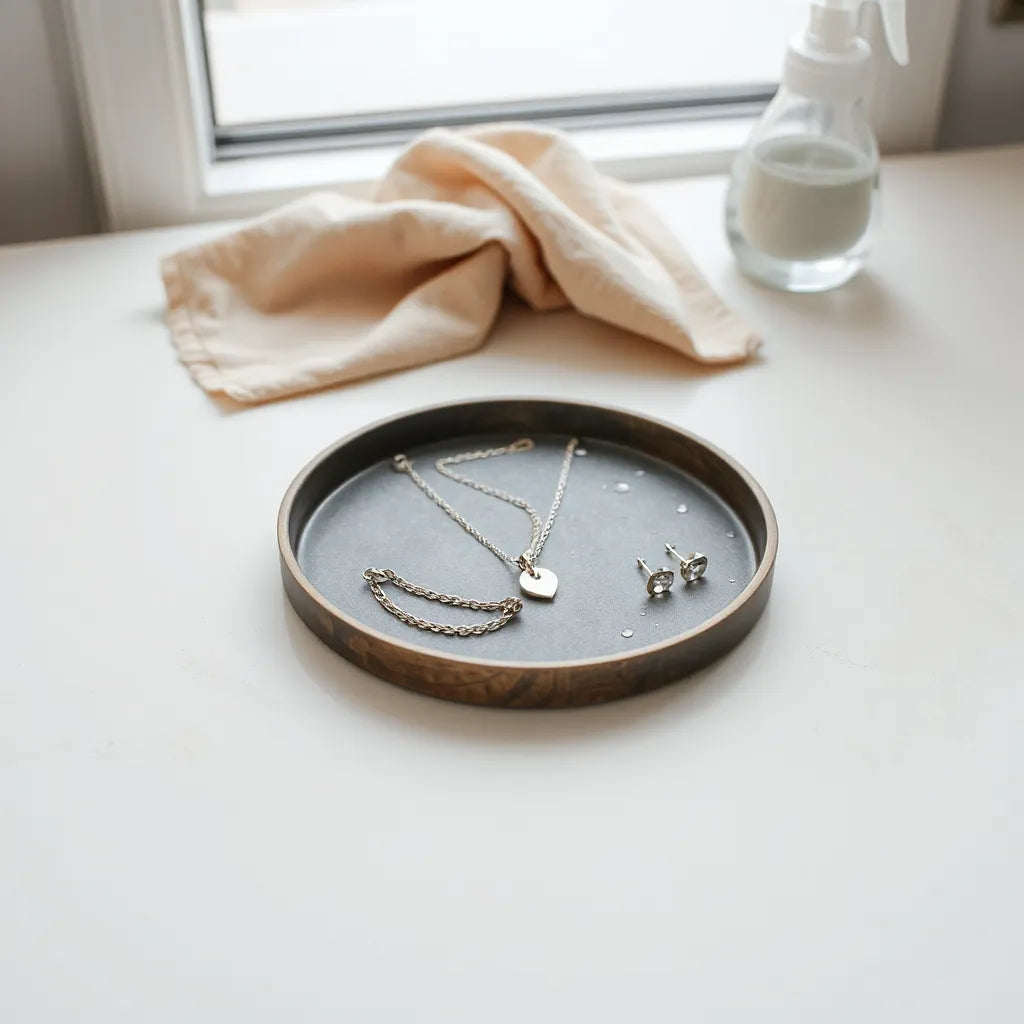
Lay down a soft cloth to prevent scratches. Gather a mild soap, lukewarm water, and a microfiber cloth. Keep the cleaning area free of dust.
Step 2: Rinse with lukewarm water
Lightly rinse the jewelry to remove loose residues. Avoid hot water, which can increase surface stress and encourage discoloration on some finishes.
Step 3: Clean gently with mild soap
Use a small amount of mild soap and your fingertips or a soft, non-abrasive cloth. Focus on areas where skin contact occurs.
Step 4: Rinse again and dry thoroughly
Rinse to remove all soap traces. Dry completely using a microfiber cloth. Moisture left behind can contribute to future dulling.
Step 5: Store properly after cleaning
Place the jewelry in a protective pouch or dry compartment until your next wear. This reduces the speed at which air and humidity can alter appearance.
Frequently Asked Questions
Does tarnish-resistant jewelry require less cleaning?
It typically needs less frequent attention, but it still benefits from routine wiping. After wear, a quick microfiber wipe removes oils that contribute to discoloration.
Can I wear sterling silver jewelry in humid weather?
Yes, but you should dry it thoroughly after exposure to sweat or moisture. Use careful storage to limit humidity and consider protective finishes if you live in a consistently damp climate.
Is diamond-cut texture harder to maintain?
Diamond-cut surfaces can trap residue in micro creases, so gentle cleaning is important. With mild soap, lukewarm rinsing, and thorough drying, maintenance remains manageable.
Final Recommendations
To get the best long-term results from tarnish-resistant jewelry, select a piece with sound metal quality and a finish that suits your lifestyle. Choose chain styles that you can wipe and dry easily, and store them away from humidity. For everyday wear, consistent habits matter more than occasional deep cleaning.
If you want a clear starting point, consider a rope chain with a well-defined surface and a finish designed for daily use. Italiachains makes handmade silver jewelry in Italy and ships directly to customers, supporting a direct purchase experience for those who prefer uncomplicated, reliable sourcing.
Explore more options on the site, including a classic sterling silver rope chain necklace and additional diamond-cut variations to match your preferred thickness and shine level.
Q&A Section
What causes tarnish most often?
Tarnish commonly develops when sulfur compounds in the environment interact with metal surfaces. Humidity and contact with skin oils can make the process faster, especially when jewelry is stored wet or left un-wiped after wear.
How do I slow down discoloration without harsh chemicals?
Use mild soap, lukewarm water, and microfiber drying. Also prioritize correct storage and wiping after wear. These steps reduce residue and limit exposure to moisture and air.
Is tarnish-resistant jewelry suitable for daily wear?
Yes. Daily wear is often where good materials and good routines show the biggest difference. If you remove jewelry before heavy chemical exposure and maintain a simple cleaning cadence, you can preserve the original appearance for longer.
What should I check before purchasing?
Confirm the metal composition, understand the finish type, and select a design that aligns with your maintenance comfort. If you want minimal effort, choose smoother surfaces and adopt a storage routine that limits humidity.
About the Author
Mike Luciano is an author with expertise in jewelry materials and everyday care strategy, with a focus on how craftsmanship affects long-term finish performance. He helps readers choose pieces that fit real routines and stay visually consistent. His guidance emphasizes careful selection, gentle maintenance, and practical storage. Thanks for reading, and may your next purchase deliver lasting shine.
Disclaimer: This article is for general informational purposes only. Jewelry performance can vary due to individual exposure conditions and product-specific finishes. Always follow the care guidance provided with your jewelry and avoid abrasive or harsh chemical cleaners unless the manufacturer explicitly recommends them.
Share:
Essential Oil Blends for Relaxation: Easy Recipes
Bamboo Kitchen Utensils: Care Tips for Lasting Use